
Plants
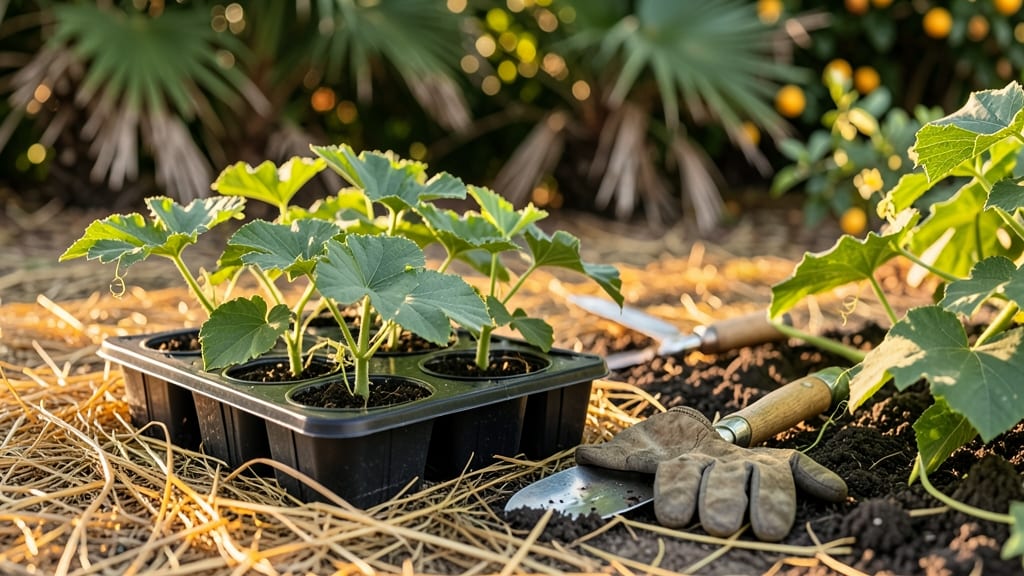
Planting cantaloupe in Florida isn’t just about throwing seeds into the ground—it’s about nailing the timing to beat the brutal summer heat and humidity. Since Florida’s frost-free year-round climate gives you two growing seasons, one wrong move could mean tiny, bitter fruit or worse.
I’ve grown cantaloupe here for years, and the difference between a bountiful harvest and a disappointing one often comes down to those first few weeks in the soil.
Most gardeners in Florida’s 9a-11 zones swear by two planting windows: early spring (February-March) for a May-June harvest, or late summer (July-August) for a fall crop ready by September-October. But here’s the catch—soil temperature matters more than calendar dates.
Your cantaloupe 🍈 won’t thrive until the ground hits at least 70°F, and waiting for that warmth is what separates the successful growers from the frustrated ones.
What you’ll discover in this guide is exactly when to start seeds indoors (or when to direct-sow), how to prep your soil for Florida’s sandy conditions, and which cantaloupe varieties actually handle our relentless sun without wilting.
We’ll also tackle the biggest mistakes—like overwatering during monsoon season—that turn promising vines into sad, underperforming plants.
Ready to grow cantaloupe that’s sweet, juicy, and actually worth the effort? Let’s get into the precise timing and care tips that’ll have you harvesting melons instead of pulling weeds all summer.
Optimal planting windows for Florida cantaloupe by region (with exact dates)
Florida’s frost-free climate gives cantaloupe growers a year-round advantage, but regional microclimates create distinct planting windows. North Florida’s cooler winters and South Florida’s tropical heat demand different timing strategies to avoid heat stress or poor pollination.
Let’s break down the best months for each zone, including soil temperature thresholds and transplant vs. direct sowing tips.
For North Florida (USDA Zones 8a-9a), like Jacksonville or Gainesville, the primary planting window runs from mid-February to early April for spring harvests. This timing aligns with soil temperatures consistently above 70°F—critical for germination.
A secondary window opens in late July to early August for fall crops, avoiding the brutal August heat that can stunt vines.
Central Florida (Zones 9b-10a), including Orlando and Tampa, enjoys longer growing seasons. Start seeds indoors in late January for transplants by mid-February, or sow directly March 15 to April 15.
For fall, aim for July 1 to July 15 to beat the monsoon rains that can rot seeds.
South Florida (Zones 10b-11), from Miami to Key West, can plant year-round, but peak success comes with two strategic windows: January 15 to February 15 (spring) and July 15 to August 15 (fall).
Here, soil temperatures rarely drop below 75°F, making frost a non-issue but requiring shade cloth in summer to protect young plants from intense UV rays.
| Region | Spring Planting Window | Fall Planting Window | Soil Temp Threshold (°F) | Key Challenge |
|---|---|---|---|---|
| North Florida | Mid-Feb to Early Apr | Late July to Early Aug | 70°F+ | Late frost risk |
| Central Florida | Mar 15 to Apr 15 | July 1 to July 15 | 72°F+ | Humidity/mildew |
| South Florida | Jan 15 to Feb 15 | July 15 to Aug 15 | 75°F+ | UV stress |
🌱 Pro Tip: Use a soil thermometer to confirm temps before planting—cantaloupe seeds won’t germinate below 65°F.
Transplanting seedlings (4-6 weeks old) gives cantaloupe a head start in Florida’s heat. For spring crops, harden off seedlings 2 weeks before the target planting date to avoid transplant shock.
In summer, direct sowing is often better—seeds germinate faster in warm soil, and young plants handle heat better than transplanted ones.
Black plastic mulch is a game-changer for Florida growers. It raises soil temperatures by 5-10°F, speeds up germination, and suppresses weeds. Lay it down 2 weeks before planting and remove it after harvest to return nutrients to the soil.
Pair it with drip irrigation to keep foliage dry and reduce powdery mildew risk.
Regardless of region, avoid planting during monsoon season (June-August in North/Central Florida). Heavy rains can drown seeds and cause fungal diseases like cucumber beetle infestations. Instead, time your fall crop to finish fruiting before October’s storms roll in.
For container growers, 5-gallon pots work well, but ensure they have drainage holes and use a lightweight potting mix. Plant in late February or July—containers heat up faster, so monitor soil moisture closely during Florida’s dry spells. Elevate pots to prevent root rot from standing water.
🌿 Key Takeaway: Florida’s two-crop system (spring + fall) maximizes yields. Stick to regional windows
Heat-tolerant cantaloupe varieties that thrive in Florida’s summer heat
Florida’s summer heat can turn cantaloupe plants into wilted messes if you’re not growing the right varieties. The key is selecting heat-resistant cantaloupes that handle 90°F+ temperatures without sacrificing sweetness or yield.
I’ve grown dozens of varieties in Florida’s sweltering climate, and these top 5 performers consistently deliver juicy, flavorful fruit even when other melons struggle.
Look for varieties with thick rinds and strong vines—they’re your best defense against sunscald and blossom-end rot. In my Gainesville garden, I’ve seen ‘Athena’ produce fruit in 100°F heat, while ‘Hale’s Best’ thrives in South Florida’s humidity.
The right choice depends on your microclimate and whether you prioritize early harvests or late-season sweetness.
🔍 Quick Tip: Always check seed packets for days to maturity—shorter seasons (60-70 days) work better for Florida’s short growing windows between heatwaves. Longer-season varieties (80+ days) risk heat stress before fruiting.
For North Florida gardens (like Jacksonville or Tallahassee), prioritize early-maturing varieties like ‘Athena’ or ‘Minnesota Midget’ to avoid late-summer heat stress. In South Florida (Miami, Fort Lauderdale), ‘Hale’s Best’ and ‘Ambrosia’ handle humidity and high heat better than standard types.
My homestead in Ocala uses black plastic mulch with these varieties to boost soil temps by 10°F+, which is a game-changer for early starts.
Pro tip: If you’re in Central Florida, mix heat-tolerant and disease-resistant traits—look for varieties labeled ‘cucumber mosaic virus-resistant’ (CMV). I’ve lost entire beds to CMV in Orlando’s summer downpours, but ‘Tasty Breeze’ has held up in my trials.
Always rotate crops annually to prevent soil-borne diseases from building up.
Where to buy seeds locally? Check UF/IFAS Extension offices for Florida-adapted seed lists, or visit Parker’s Seed & Pet in Winter Haven for cantaloupe varieties tested in your region. For organic options, Southern Exposure Seed Exchange specializes in heat-tolerant, open-pollinated varieties—perfect for Florida’s intensive growing season.
🌱 Key Takeaway: Florida’s two growing seasons (spring and fall) mean you can plant cantaloupe twice a year—just match your variety to your local heat peaks. ‘Athena’ for spring, ‘Ambrosia’ for fall, and you’ll enjoy homegrown cantaloupe from May through October.