
Companion Plants
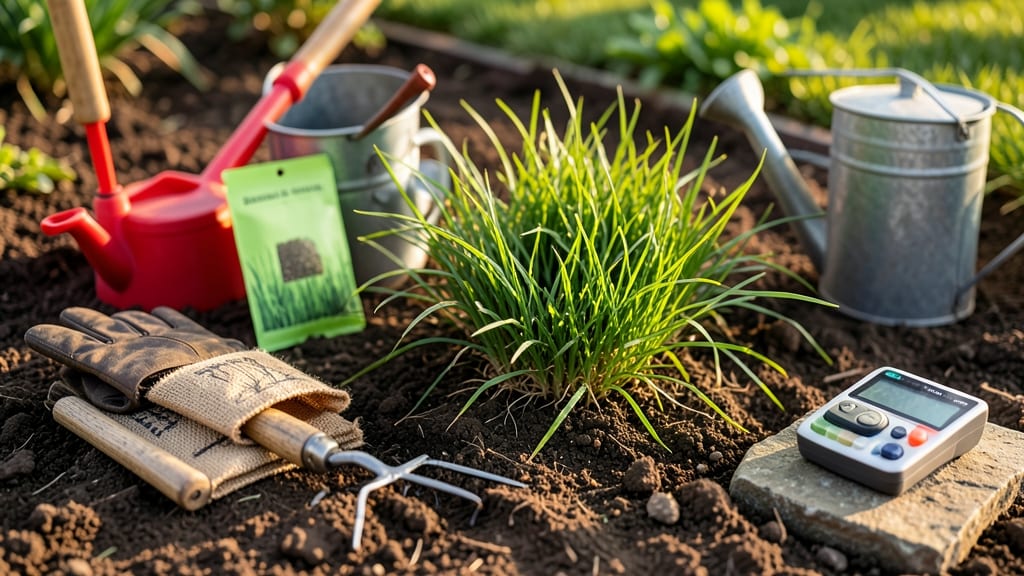
Planting Bermuda Grass seed 🌱 in Texas isn’t just about waiting for spring—it’s about beating the heat before it beats your lawn. Get the timing wrong, and you’ll spend months battling bare spots instead of enjoying that lush green carpet.
Texas’ brutal summers mean the ideal window is narrow: late spring to early summer when soil temps hit 65°F+. But here’s the catch—North Texas and South Texas don’t sync up. Plant too early, and your seeds rot; too late, and the heat zaps germination before it starts.
I’ll break down the exact deadlines for your heat zone, plus how to prep your soil for fast establishment—because in Texas, speed matters more than patience. Let’s get your lawn growing before the thermometer does.
You’ll learn how to check soil readiness, pick the right varieties for your region, and avoid the 3 biggest mistakes Texas gardeners make. Ready to turn that bare soil into a heat-proof lawn?
Texas heat zones and Bermuda grass planting deadlines by month
Texas’ 12 heat zones (A1–B3) dictate the perfect window for planting Bermuda grass seed—and missing it can leave your lawn struggling in the state’s 100°F+ summers. The golden rule: soil must stay above 65°F for 4+ weeks straight to avoid seed rot or slow germination.
Let’s break down the month-by-month deadlines by zone, including how to check your local conditions.
North Texas (Zones A1–A2) has the earliest deadlines due to cooler springs, while South Texas (Zones B1–B3) can plant up to 6 weeks later.
For example, in Dallas (Zone A2), your last chance is mid-June, but in Houston (Zone B2), you can seed until early July. Use the table below to find your zone’s exact window.
Pro Tip: If you plant too early (before soil hits 65°F), seeds will rot. Too late (after July 15), and your grass won’t establish before winter dormancy. Late May to early June is the safest bet for most Texans.
| Heat Zone | Region Examples | Ideal Planting Window | Soil Temp Threshold | Risk of Late Planting |
|---|---|---|---|---|
| A1 | Panhandle, Amarillo | May 1–June 15 | 65°F+ for 4+ weeks | Poor establishment |
| A2 | Dallas, Fort Worth | May 15–June 30 | 65°F+ for 4+ weeks | Weak root growth |
| B1 | San Antonio, Austin | May 1–July 1 | 65°F+ for 4+ weeks | Heat stress |
| B2 | Houston, Corpus Christi | May 15–July 15 | 65°F+ for 4+ weeks | Slow recovery |
| B3 | Brownsville, Rio Grande Valley | April 15–July 31 | 65°F+ for 4+ weeks | Minimal risk |
To check your local soil temperature, use a soil thermometer (insert 4 inches deep) or the finger test: Push your finger into the soil. If it feels warm like a hot cup of tea, it’s ready.
If it’s cool like a fridge, wait 1–2 weeks. Morning shade can trick you—always test in direct sunlight.
If you’re in Zone A1 or A2 and soil warms slowly, consider black plastic mulch to raise temperatures by 10–15°F in 2–3 weeks. Lay it down 1–2 weeks before planting to speed up germination. Just remove it once seeds sprout to avoid heat stress on young grass.
For South Texas (
Signs your Texas soil is ready for Bermuda grass seed (and what to do if it’s not)
Before planting Bermuda grass seed in Texas, your soil must meet three critical conditions: temperature, moisture, and pH balance. Skipping these checks often leads to slow germination or seed rot—especially in Texas’ unpredictable spring weather. I’ve learned the hard way that rushing the process rarely pays off.
First, check your soil temperature with a soil thermometer (available at garden centers for under $10). Bermuda grass seeds need soil that’s consistently 65°F or warmer at a 4-inch depth. If it’s cooler, your seeds will sit dormant or worse—rot.
In North Texas, this usually means waiting until mid-April to May, while South Texas gardeners can start as early as March.
Next, test moisture levels by performing the finger test: Stick your finger 2-3 inches into the soil. If it feels dry, water thoroughly until moisture reaches 6 inches deep.
Overwatering now is better than underwatering—Bermuda grass seeds need consistent dampness to sprout, but they’ll drown if soggy. Aim for soil that’s like a wrung-out sponge.
🌱
⚠️ Warning: Planting Too Early or Late
Too Early: Seeds rot in <65°F soil (common in March for North Texas). Solution: Use black plastic mulch for 2-3 weeks to warm soil faster.
Too Late: Seeds struggle to establish before summer heat (after June). Solution: Plant sod instead for quicker coverage.
Don’t overlook soil pH, either. Bermuda grass thrives in slightly acidic to neutral soil (pH 6.0–7.5). Test your soil with a home pH kit (or send a sample to your local Texas A&M AgriLife Extension).
If your pH is off, amend it with lime (to raise pH) or sulfur (to lower pH) at least 4–6 weeks before planting. Rushing this step can stunt root growth.
If your soil isn’t ready, you have two options: wait and prepare or use a trick. For cooler zones, lay down black plastic sheeting 2–3 weeks before planting to absorb sunlight and raise soil temps.
Alternatively, opt for Bermuda grass plugs instead of seed—they establish faster and tolerate cooler soil better.
Once your soil passes all three checks, it’s time to act. Plant in the morning to reduce evaporation, and keep the soil consistently moist (not waterlogged) for the first 3–4 weeks. Patience here pays off—your Bermuda grass will reward you with dense, heat-resistant coverage by summer.
✂️