
Plants
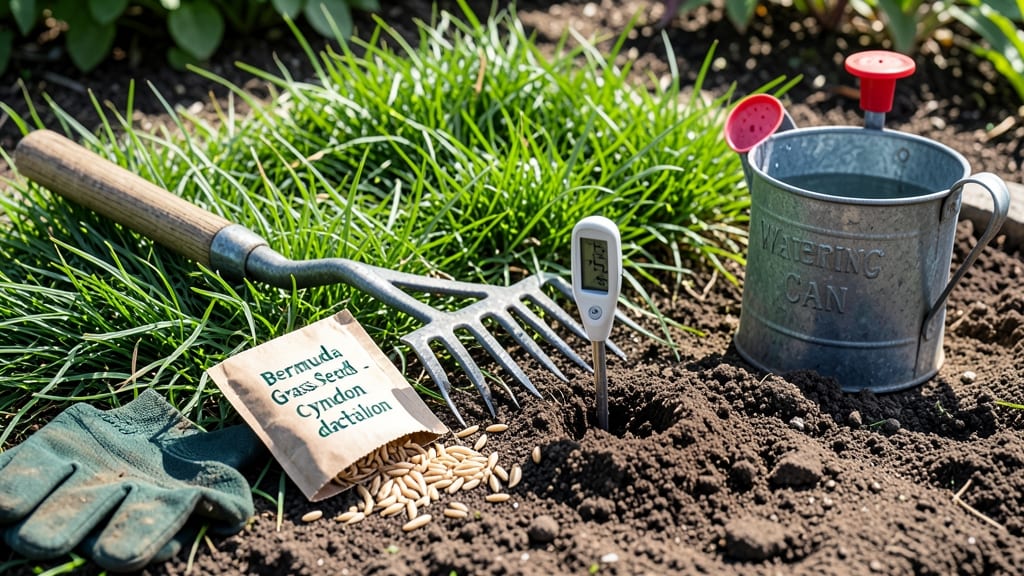
Planting Bermuda grass seed 🌱 at the wrong time in North Carolina can mean the difference between a lush, green lawn and months of bare soil—so timing is everything.
The key to success lies in waiting for that perfect window when soil temperatures hit 65°F or higher, typically in late spring to early summer.
Why does this matter? Bermuda grass thrives in heat, but it needs a warm kickstart to germinate properly. Skipping this step often leads to slow growth or even failed establishment, especially in NC's 6b-8a zones where temperatures can swing dramatically.
The right timing isn't just about the calendar—it's about aligning with your region's microclimate.
In this guide, I'll break down exactly when to plant for fast germination, how to test your soil's readiness, and what adjustments to make based on whether you're in the Coastal Plain, Piedmont, or Mountains.
You'll also learn how to avoid common mistakes that derail even the most eager lawn projects.
Let's get your Bermuda grass off to the best possible start—because once you nail the timing, you're already halfway to that dream lawn. Ready to dive in?
NC soil temperature rules for planting Bermuda grass seed
Bermuda grass thrives in North Carolina's heat, but its germination success hinges on soil temperatures. The magic number? A consistent 65°F soil temperature at 4-inch depth. Below this, seeds linger dormant, while above it, they sprout aggressively.
In NC's Coastal Plain, this typically happens by mid-April to early May, while Mountain regions may wait until late May or June.
Why the urgency? Bermuda grass seeds require warmth to break dormancy. Cold soils slow metabolism, leading to weak, uneven sprouts. Worse, late planting risks summer heat stress before roots establish.
My pro tip: Use a soil thermometer to confirm temps before planting—don't guess! Coastal areas often hit 65°F weeks earlier than Piedmont.
Here’s the catch: Soil warms faster than air. A 75°F afternoon might feel perfect, but your soil could still be 55°F at depth. Test in the morning shade (when temps are lowest) to avoid false confidence.
Pro growers in Raleigh swear by black plastic mulch to accelerate warming by 5-7°F in slow-starting zones.
North Carolina’s microclimates complicate timing. The Coastal region (e.g., Wilmington) can plant by April 15, while Asheville’s mountains may not reach 65°F until June 1. Even within 50 miles, elevation shifts planting windows by 2-3 weeks. Always check your USDA Zone (6b-8a) and local frost data.
Once soil hits 65°F, germination typically takes 7-14 days, but this varies by seed type. Common Bermuda sprouts faster than Tifway 419 (a hybrid). Watch for green shoots in 10-14 days under ideal conditions.
If you see mold or slimy soil, you’ve overwatered—reduce to ½ inch per week until sprouts appear.
| NC Region | Ideal Planting Window | Soil Temp Requirement | Key Microclimate Factor | Estimated Germination Time |
|---|---|---|---|---|
| Coastal Plain (Zones 8a-9a) | April 15 - May 15 | 65°F+ (4" depth) | Humidity + salt air | 7-10 days |
| Piedmont (Zones 7b-8a) | May 1 - June 1 | 65°F+ (4" depth) | Moderate rainfall | 10-14 days |
| Mountains (Zones 6b-7a) | June 1 - June 15 | 68°F+ (4" depth) | Cooler nights | 14-21 days |
Don’t let false starts fool you. If seeds sprout then die back after a cold snap, replant once soil stays consistently warm. In Zone 7a (e.g., Boone), this often means waiting until late May. Patience pays off—established Bermuda lawns outperform cool-season grasses in NC’s summers.
Pro move: Pre-warm your soil in cooler zones. Lay down clear plastic sheeting 1-2 weeks before planting to raise temps by 10°F+. Just remove it 24 hours before seeding to avoid overheating. I’ve seen 3-week germination time cuts using this trick in the Blue Ridge.
Remember: Soil temp > air temp for germination. Use a soil thermometer (not a weather app) to avoid costly mistakes. Once you hit that 65°F threshold, act fast—Bermuda grass seeds lose viability in 30 days if stored improperly.
For urban NC lawns, heat islands can add 5-10°F to soil temps. If your yard is paved-heavy, plant 2 weeks earlier than rural areas. Just monitor for drought stress—urban heat = faster evaporation.
NC soil temperature rules for planting Bermuda grass seed
Bermuda grass thrives when planted in warm soil, but hitting the 65°F threshold is non-negotiable for germination. In North Carolina, soil temperatures lag behind air temps—so don’t rush planting just because spring arrives.
Coastal areas like Wilmington hit 65°F by mid-April, while mountain regions like Asheville may wait until late May. Always test soil warmth with a soil thermometer at 2-inch depth before seeding.
Waiting too late risks poor germination because summer heat can dry out seeds before roots establish. The ideal window spans late May to early June across most of NC, aligning with peak soil warmth and consistent rainfall.
Urban heat islands (like Raleigh or Charlotte) may warm 1-2 weeks earlier than rural areas, so adjust accordingly.
| NC Region | Ideal Planting Window | Soil Temp Requirement | Key Microclimate Factor | Estimated Germination Time |
|---|---|---|---|---|
| Coastal (Zones 8a-9a) | Late April–May 15 | 65°F+ (earlier than inland) | Humidity + salt spray | 7–10 days |
| Piedmont (Zones 7b-8a) | May 1–June 1 | 68°F+ (warmer inland) | Moderate rainfall | 10–14 days |
| Mountains (Zones 6b-7a) | June 1–15 | 70°F+ (cooler high elevations) | Short growing season | 14–21 days |
Use a soil thermometer to verify warmth—air temps can mislead you. For example, a 75°F afternoon might hide 60°F soil, stalling germination. If your region’s soil stays below 65°F past June 1, consider warm-season covers (like black plastic) to accelerate heating.
Just remove them 24 hours before planting to avoid overheating seeds.
Once soil hits 65°F+, Bermuda grass seeds germinate in 7–14 days, but consistent moisture is critical. Water lightly twice daily (morning/evening) until sprouts appear, then taper to 1 inch per week. Overwatering can suffocate seeds, while underwatering causes crusting that blocks sunlight.
Pro tip: Test soil pH (aim for 5.8–6.5) before planting—acidic soil (pH <5.8) locks out nutrients, slowing growth. Amend with pelletized lime if needed, and avoid fresh manure, which can burn seeds.
A starter fertilizer (like 10-10-10) at planting time gives seedlings a 3-week head start.
Timing isn’t just about heat—it’s about avoiding late-spring frosts. Check your last frost date (NC ranges from March 15 in the coast to May 1 in the mountains) and plant 2 weeks after the average last frost.
For example, if your area’s frost date is April 1, wait until April 15 to plant.