
Plants
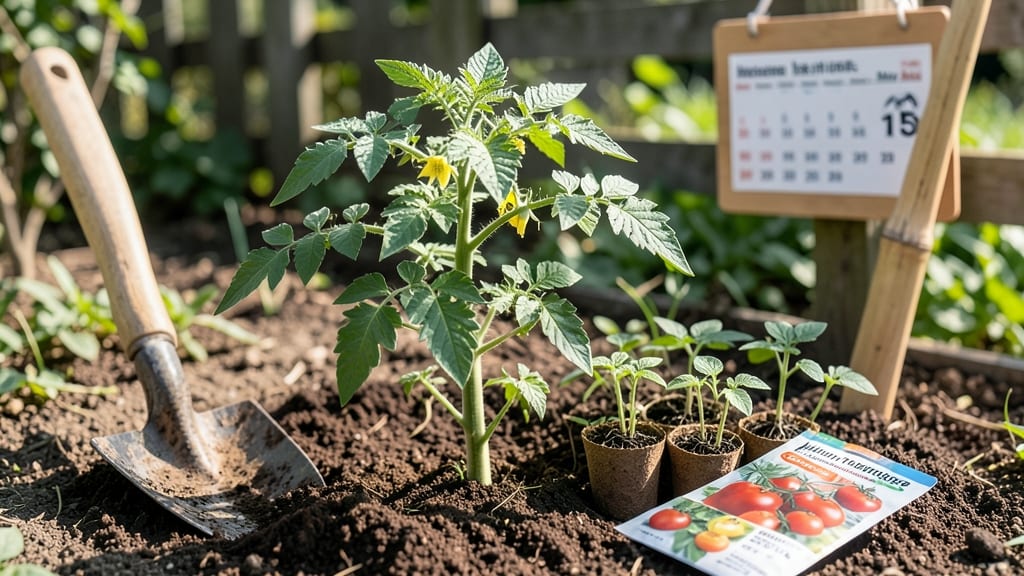
Timing when do you plant tomatoes in Illinois isn't just about following a calendar—it's about outsmarting the unpredictable Midwest weather before frost steals your harvest. One wrong move, and your seedlings could turn into frost-damaged casualties before they even reach the soil. The key?
Understanding your local USDA zone (typically 5-6 for most of the state) and knowing when soil temperatures finally hit that 60°F sweet spot for planting.
I've learned the hard way that rushing too early or waiting too long can mean the difference between a garden bursting with ripe 🍅 tomatoes and empty tomato cages by summer.
Whether you're starting seeds indoors in March or transplanting seedlings in May, the right timing ensures your plants have enough growing season to thrive before the first frost arrives in October.
Let me show you exactly when to plant—down to the week—and how to adjust for your specific corner of Illinois. What most gardeners don't realize is that even within Illinois, microclimates create big differences.
Northern areas like Chicago face later last-frost dates compared to southern regions near St. Louis, and those extra weeks can make or break your harvest.
We'll break down the exact planting windows, soil prep tips, and even tricks to extend your season with row covers or cold frames—so you can maximize every sunny day in your garden. Ready to turn your tomato dreams into reality?
Stick around, and I'll walk you through the step-by-step schedule, regional adjustments, and pro tips that have helped Illinois gardeners like you go from nervous newbie to confident grower. Your first perfect 🍅 tomato is closer than you think!
Illinois planting zones & last frost dates for tomatoes
Illinois spans USDA Hardiness Zones 5 through 8, creating dramatic differences in frost dates and growing seasons. Northern Illinois (Zone 5) faces earlier frosts, while southern Illinois (Zone 8) enjoys longer growing windows.
Tomatoes thrive in warm soil—planting too early risks frost damage or stunted growth. Let’s break down the critical deadlines by region to maximize your harvest potential.
Your last frost date is the most critical factor. In northern Illinois (e.g., Chicago), the average last frost falls between April 15–May 1. Southern Illinois (e.g., St. Louis), however, sees last frosts as late as April 1–April 15.
These dates shift 2–3 weeks earlier in high-altitude areas like Galena or Dixon.
Soil temperature matters just as much as air temperature. Tomatoes need consistent soil temps above 60°F to thrive. In cooler zones, wait until late May for outdoor planting, even if frost risk drops. Use a soil thermometer to confirm—cold soil stalls germination and weakens seedlings.
For fall planting, aim for transplanting 60–80 days before your first frost (typically mid-August to early September). Late varieties like ‘Celebrity’ or ‘Better Boy’ can handle cooler temps if given protection, but early frosts will still kill plants.
Southern Illinois gardeners have extra weeks to experiment with succession planting.
🌱
Microclimates complicate things further. Urban areas like Chicago can experience 3–5°F warmer temps than rural zones due to heat islands. Conversely, river valleys (e.g., near the Mississippi or Illinois Rivers) may see later frosts due to moisture retention.
Always check local weather stations or the Illinois State Climatologist for precise data.
If you’re starting seeds indoors, begin 6–8 weeks before your last frost date. Seedlings need 12+ hours of light daily—use grow lights if natural light is insufficient.
Harden off seedlings for 7–10 days before transplanting to avoid shock. Northern Illinois gardeners should delay outdoor planting until mid-June if early starts fail.
For container growing, adjust your timeline by 1–2 weeks earlier since pots warm faster. However, containers also dry out quicker, so watering consistency becomes even more critical. Use self-watering pots or drip irrigation to maintain moisture in Zone 5 where drought stress is common.
🌡️
Pro tip: Plant early-maturing varieties (e.g., ‘Early Girl’ or ‘Stupice’) in <
Step-by-step tomato planting timeline by Illinois region
Timing your tomato planting in Illinois isn’t one-size-fits-all—Northern Illinois gardeners face earlier frost risks than Southern Illinois, where warmer microclimates extend growing seasons. My strategy? Plan for 3 distinct phases: indoor starts, transplanting outdoors, and succession planting for late varieties.
Let’s break it down by region to avoid frost damage and maximize your harvest.
For Northern Illinois (USDA Zones 5-6), like Chicago or Rockford, start tomato seeds indoors by early March (6-8 weeks before last frost). Southern Illinois (Zones 6-7), such as St. Louis or Carbondale, can delay starts until mid-March.
The key is matching your timeline to soil temperature—tomatoes need 60°F soil to thrive, and cool soil slows germination.
Indoor Seed Starting (March)
Start seeds 6-8 weeks before last frost (Northern IL: early March; Southern IL: mid-March). Use seedling trays with well-draining soil and keep under grow lights (14-16 hours/day). Harden off seedlings for 1 week before transplanting.
Transplant Outdoors (April-May)
Northern IL: Transplant after May 15 (when soil hits 60°F). Southern IL: April 15-May 1. Bury stems deeply (up to lower leaves) to encourage root growth. Space plants 18-24 inches apart for dwarf varieties or 24-36 inches for indeterminate types.
Succession Planting (June-July)
For a continuous harvest, plant fast-maturing varieties (e.g., 'Early Girl') every 2-3 weeks in June. Use row covers to protect seedlings from late frosts. Southern IL can extend planting until early July for fall crops.
Harvest Timeline (June-October)
Northern IL: First harvests in late June (early varieties). Southern IL: June-July. Indeterminate varieties (e.g., 'Brandywine') produce until first frost (mid-October in Southern IL, early October in Northern IL). Prune suckers regularly to boost fruit production.
Pro tip: Use a soil thermometer to confirm 60°F soil before transplanting—cool soil delays growth and invites disease. My 2023 mistake? Planting too early in Zone 5 and losing seedlings to a late frost. Now, I wait for 3 consecutive days above 50°F before committing.
For container gardening, start seeds 2 weeks later (they warm up faster) and use 5-gallon pots for mature plants. Southern Illinois gardeners can even try fall planting in August for late-season varieties like 'Celebrity'—just protect seedlings with row covers if nights dip below 50°F.
Track your local frost dates using the Illinois State Climatologist or Old Farmer’s Almanac. Adjust your timeline by 1-2 weeks if you’re in a microclimate (e.g., urban heat islands or river valleys). Patience pays off—rushing leads to blossom-end rot or stunted plants.
🌱