
Trees
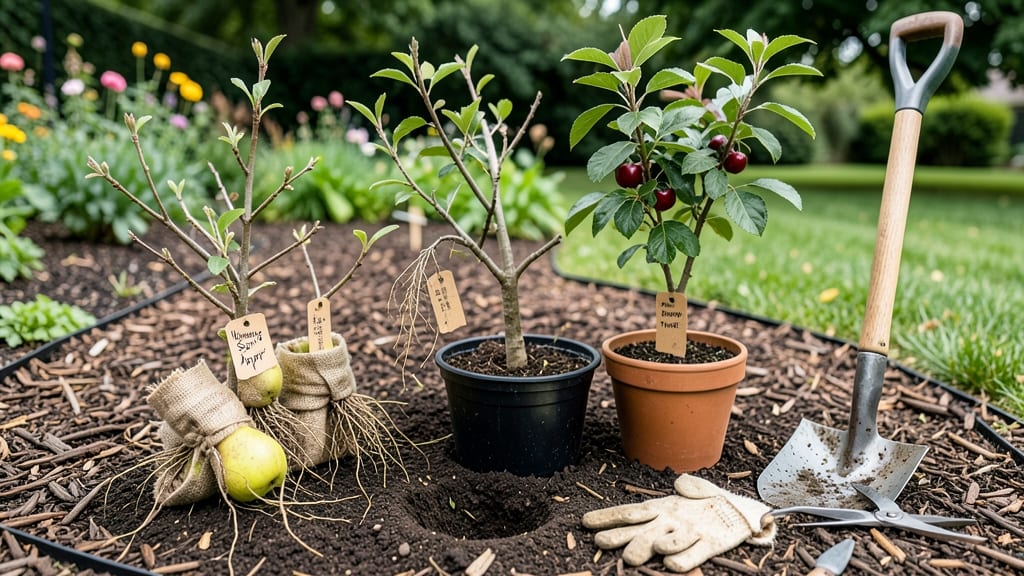
Timing your fruit tree planting in Zone 5 can make or break your orchard's success—get it wrong, and you risk stunted growth or frost damage before roots even establish.
The key lies in understanding when the soil warms enough to support strong root development, typically between April and May or late fall, when temperatures dip but aren't freezing.
I've learned the hard way that rushing too early means battling cold soil, while waiting too long cuts your growing season short.
For most 🍎 fruit trees in Zone 5, early spring is your best bet—once the ground thaws and soil temperatures hit 40-50°F. This window gives roots 6-8 weeks to settle before summer heat arrives.
But don't overlook fall planting (September-October) for varieties like apples and pears, which benefit from cooler weather and fewer pests. The trick? Avoid planting when late frosts are still lurking, or you'll be fighting for survival.
What I've found works best is testing soil moisture and temperature before planting—probe the ground 6-8 inches deep to check for consistent warmth. Zone 5's unpredictable frosts mean you'll also want to choose cold-hardy varieties suited to your microclimate, whether you're in northern Wisconsin or upstate New York.
Let me show you exactly how to pick the right timing, soil prep, and tree types for your specific conditions.
From bare-root trees to container-grown saplings, I'll walk you through the exact steps to maximize root growth and set your fruit trees up for years of bountiful harvests.
Whether you're a first-time gardener or a seasoned orchard keeper, these insights will help you avoid common mistakes and get your trees off to a flying start.
Optimal planting windows for fruit trees in Zone 5 based on soil temperature
In Zone 5, timing your fruit tree planting is everything—plant too early, and roots may freeze; too late, and they won’t establish before winter. The ideal soil temperature range for planting is 40-50°F, signaling that roots can grow without risking frost damage.
This typically aligns with early spring (April-May) or fall (September-October), but regional microclimates can shift these windows by weeks.
Northern Zone 5 (e.g., Minnesota, Wisconsin) often waits until late April or early May when last frost dates are past, while southern Zone 5 (e.g., Ohio, Pennsylvania) can plant as early as March if soil thaws early.
Always check your local frost dates—Zone 5’s average last frost is May 15, but this varies by 10-14 days depending on elevation and latitude.
Soil temperature is your best guide, not just calendar dates. Use a soil thermometer to confirm readiness—roots need warmth to grow, but shoots shouldn’t sprout until consistent daytime temps above 50°F. Bare-root trees planted in fall (September-October) benefit from cooler weather, reducing transplant shock, but must have 6-8 weeks to establish roots before ground freezes.
Container-grown trees offer flexibility: they can be planted throughout spring and early fall (March-November), but avoid summer heat (June-August), which stresses roots. If planting in late fall (November), choose cold-hardy varieties like Honeycrisp apples or Keepsake pears, which tolerate winter better than tender peaches or plums.
Here’s how to adjust for your location:
- Northern Zone 5: Prioritize late April-May for spring planting.
- Southern Zone 5: Can plant as early as March if soil warms early.
- Urban areas: Microclimates near buildings or water may allow 2-3 weeks earlier planting.
| Planting Window | Soil Temp Requirement | Best For | Zone 5 Region |
|---|---|---|---|
| Early Spring (April-May) | 40-50°F | Bare-root trees, root establishment | All Zone 5 |
| Fall (September-October) | 50-60°F | Cold-hardy varieties, reduced transplant shock | Northern Zone 5 |
| March (Southern Zone 5) | 40-45°F | Container-grown trees, early warm-up | Ohio, PA, NY |
| Late Fall (November) | 45-50°F | Dormant planting, cold-hardy species | Northern Zone 5 only |
Missed the ideal windows? Don’t panic—you can still plant container-grown trees in June or August, but prioritize watering and mulching to compensate for heat stress. Just avoid planting in July, when Zone 5’s summer drought and heat can kill young roots before they establish.
Pro tip: Mark your calendar for 2-3 weeks before your average last frost date. This gives you a 10-day buffer to adjust for unexpected cold snaps.
For example, if your last frost is May 10, aim to plant by April 25 to ensure roots have time to grow before shoots emerge.
Remember, root growth is the priority—shoots can wait. A tree with a strong root system by winter will fruit better in its second or third year. Use mycorrhizal fungi or compost tea at planting to boost root development during those critical first 60 days.
For Zone 5 gardeners, the best month is often April, but always verify soil temperature. If you’re unsure, fall planting (September) is a safer bet for bare-root trees, as cooler temps reduce stress. Either way, mulch heavily to protect roots from winter heaving.
How to prepare your Zone 5 soil for fruit tree planting success
Preparing your Zone 5 soil properly is the foundation for healthy fruit tree growth. Poor soil can stunt root development, making your tree vulnerable to disease and poor fruit production.
Start by testing your soil pH—aim for a range of 6.0 to 7.0, which is ideal for most fruit trees like apples, pears, and cherries.
If your soil is too acidic, add lime to raise the pH, while sulfur can lower it if needed. Organic matter like well-aged compost or manure improves soil structure and water retention. Mix in 2-3 inches of compost into the top 12 inches of soil before planting.
Drainage is critical in Zone 5, where heavy clay soils can suffocate roots. Amend dense soil with sand or perlite to create air pockets. For container-grown trees, use a well-draining potting mix with added perlite or vermiculite to prevent root rot.
Mulching is another key step. Apply a 3-inch layer of organic mulch (like wood chips or straw) around the base of your tree, but keep it 6 inches away from the trunk to prevent rot. Mulch helps regulate soil temperature, retains moisture, and suppresses weeds—all critical for young trees.
For bare-root trees, soak the roots in water for 1-2 hours before planting to rehydrate them. If planting in fall, do it at least 4-6 weeks before frost to allow roots to establish before winter dormancy. In spring, plant as soon as the soil is workable (40-50°F).
Finally, consider installing a drip irrigation system to deliver consistent moisture. Fruit trees need deep, infrequent watering—aim for 15-20 gallons per week for young trees, especially during Zone 5’s dry spells. Water in the morning to reduce fungal risks.