
Trees
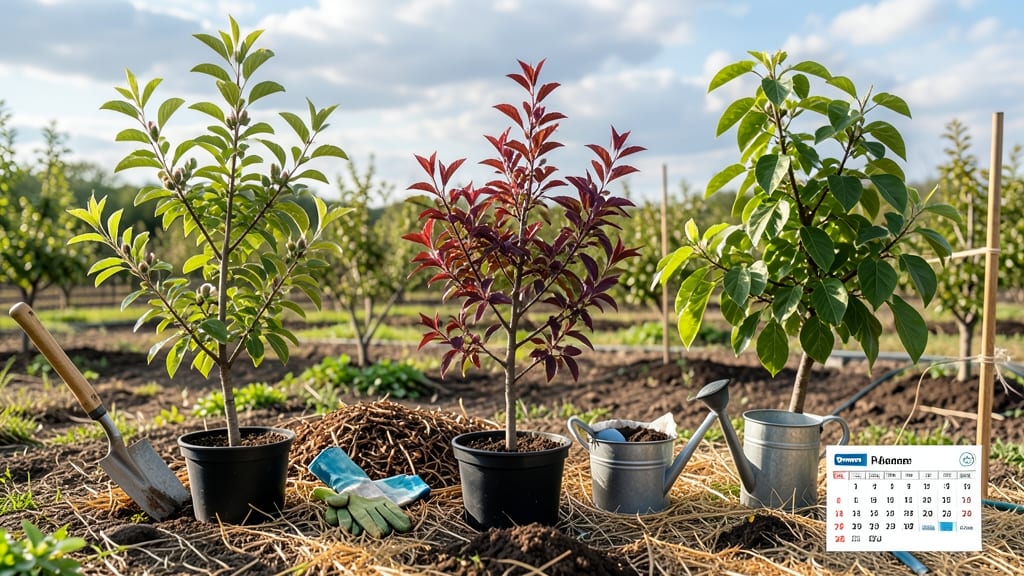
Planting fruit trees in Kansas isn't just about grabbing a sapling and sticking it in the ground—it's about timing it right to beat the 5b-7a zone's unpredictable frost and give your 🍎 trees the best shot at thriving.
Too early, and a late frost could wipe out your new investment. Too late, and your tree might struggle to establish roots before summer heat sets in.
The ideal window—late winter to early spring—balances soil warmth with frost risk, but even then, stone fruits like peaches need different care than apples or pears.
I’ll break down the exact chill hour needs for Kansas’ top varieties and when to plant each, so you can avoid common mistakes that leave trees stunted or fruitless. Whether you’re in Wichita’s urban microclimate or rural farmland, these tips will help you pick the perfect moment.
Ready to turn your backyard into a Kansas orchard? Let’s get your fruit trees off to the strongest start possible—before the first buds even think about blooming.
Best planting months for Kansas fruit trees by chill hour requirements
Kansas' USDA zones 5b-7a create unique challenges for fruit tree planting. The chill hour requirement—hours below 45°F—dictates when you can plant. High-chill varieties like apples need 800+ hours, while low-chill peaches thrive with 300-500 hours.
Timing matters because planting too early risks frost damage, while waiting too long shortens the growing season.
Most Kansas gardeners aim for late winter to early spring (February-April), but your exact window depends on the fruit type and microclimate. For example, southeast Kansas (Zone 7a) has a longer frost-free season than northwest Kansas (Zone 5b).
Always check your last frost date—typically March 15—and plant 4-6 weeks before buds break.
Here’s how chill hours break down for Kansas’ most popular fruit trees:
| Fruit Type | Chill Hours Needed | Best Planting Window | Kansas Notes |
|---|---|---|---|
| Apples & Pears | 800-1,200 | Late February - Early April | Plant bare-root varieties in Zone 5b by March 1 to avoid frost. |
| Peaches & Nectarines | 300-500 | Early March - Mid-April | Ideal for Zone 6-7a; avoid late planting in Zone 5b. |
| Plums & Cherries | 400-800 | Late February - Late March | Sour cherries (e.g., 'Montmorency') handle Zone 5b best. |
| Pecans | 200-400 | March - Early April | Best for southern Kansas (Zone 6-7a); slow-growing but drought-tolerant. |
For high-chill varieties like apples, prioritize late February to early March planting. In Zone 5b, wait until soil temperatures rise above 40°F to prevent root damage. Low-chill peaches can handle slightly later planting (up to mid-April), but avoid bud break—a sure sign of frost risk.
Always test your soil’s drainage and pH (ideal: 6.0-7.0) before planting. Amend with compost or peat moss if needed, and consider a windbreak for young trees in exposed areas. Mulch heavily (3-4 inches) to retain moisture and regulate soil temperature.
If you’re in Zone 7a, you have more flexibility—plant peaches and plums as late as April 15. But remember: root establishment is critical. Trees planted in May may struggle to flower and fruit the first year.
For container-grown trees, the window extends to June, but prioritize deep watering to compensate for the shorter season.
Kansas State University Extension recommends using local nurseries for regionally adapted varieties. For example, 'Haralson' peaches thrive in Zone 5b, while 'Lodi' apricots are better suited for Zone 6-7a. Always ask for chill hour data when selecting trees—this ensures your investment aligns with Kansas’ climate.
One common mistake? Planting bare-root trees too early. If you dig the hole and leave it open for weeks, roots dry out. Instead, plant immediately after purchase or store bare-root trees in a cool, moist location (like a basement).
For container-grown trees, water thoroughly 24 hours before transplanting to reduce shock.
Finally, consider microclimates—a south-facing slope warms up faster than a north-facing yard. If you’re in a urban area, pavement and buildings can create heat islands, pushing back frost dates by 1-2 weeks. Use these natural advantages to extend your planting window safely.
Best planting months for Kansas fruit trees by chill hour requirements
Kansas' USDA zones 5b-7a create a unique challenge for fruit tree growers. The state's chill hour needs (300-1,000+ hours below 45°F) determine which varieties thrive. High-chill apple and pear trees (600-1,000 hours) need early spring planting, while low-chill peaches and plums (300-500 hours) have more flexibility.
Your last frost date (typically March 15) marks the absolute deadline for bare-root trees. Container-grown trees can handle slightly later planting, but April 15 is the safest cutoff for most varieties. Missing this window risks stunted growth or winterkill.
| Fruit Type | Chill Hours Needed | Optimal Planting Window | Kansas Deadline | Frost Risk |
|---|---|---|---|---|
| Apples | 800-1,000 | Feb 15 - Mar 15 | Mar 15 (hard) | High |
| Pears | 600-800 | Feb 20 - Mar 20 | Mar 20 (strict) | High |
| Peaches | 300-500 | Mar 1 - Apr 15 | Apr 15 (flexible) | Moderate |
| Plums | 400-600 | Mar 10 - Apr 10 | Apr 10 (moderate) | Moderate |
| Cherries | 700-900 | Feb 1 - Mar 10 | Mar 10 (critical) | Very High |
For high-chill varieties like 'Honeycrisp' apples, I recommend planting by March 1 in western Kansas (zone 7a) and by February 28 in eastern regions (zone 5b). These trees need full dormancy before bud break, so rushing them risks late frost damage to blossoms.
Low-chill Elberta peaches (400-500 hours) offer more wiggle room. You can plant them as late as April 15 in most of Kansas, but avoid planting after May 1—the roots won't establish before summer heat sets in. Always check Kansas State University's frost maps for your specific county.
Pro tip: Use black plastic mulch in early spring to warm the soil and extend your planting window by 1-2 weeks for low-chill varieties. Just