
Companion Plants
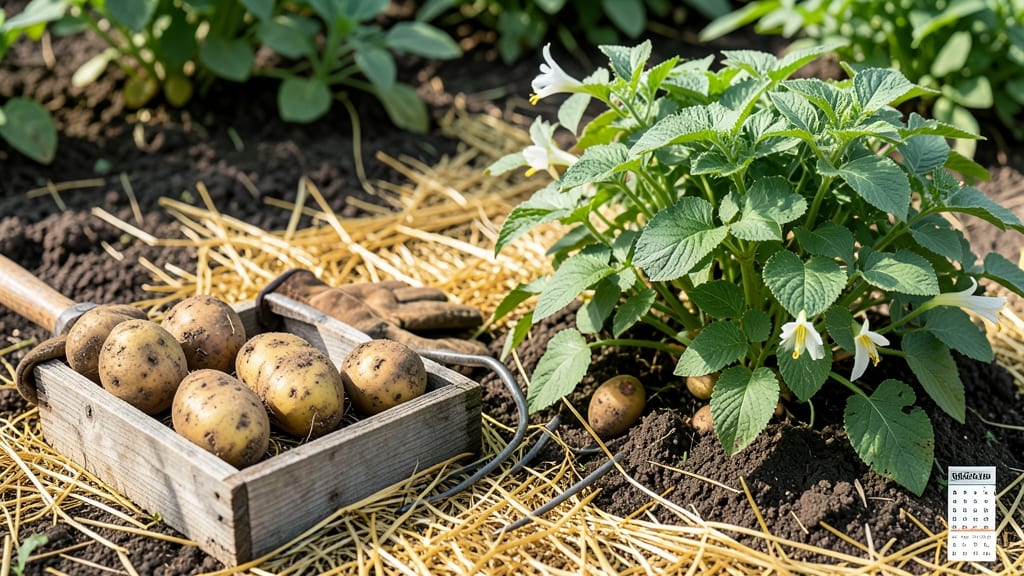
Planting potatoes in Zone 8 isn't just about waiting for spring—it's about syncing your schedule with your 🥔 plants' chill-hour needs to avoid stunted growth or late harvests.
The wrong timing can leave you with bitter tubers or even no yield at all, especially when mild winters mean frost isn't always a reliable signal.
Most gardeners in Zone 8 make the mistake of planting too late in spring, when soil temperatures are already climbing. But the real secret is starting 4-6 weeks before your last frost date—typically in early February for early varieties or late September for fall plantings.
This gives your potatoes enough time to mature before summer heat sets in.
If you're new to growing potatoes in this climate, don't worry—I'll walk you through the exact chill-hour requirements for different varieties and how to adjust your planting schedule. You'll learn which cold-hardy varieties thrive in Zone 8's mild winters and how to space them properly for maximum yield.
By the end, you'll have a clear planting timeline that matches your local conditions, ensuring your potatoes get the perfect start. Let's get those spuds in the ground at the right time for a bountiful harvest!
Zone 8 potato planting timeline: chill-hour requirements explained
In Zone 8, where winters are mild and summers can be scorching, potatoes need chill hours—a specific number of hours below 40°F (4°C)—to trigger tuber formation. Most varieties require 300–1,000 chill hours, but Zone 8’s winters often fall short.
Planting too early risks rot from cold, wet soil, while waiting too long means heat stress before harvest.
Your last frost date in Zone 8 is typically January 15, but potatoes can handle light frosts. The key is soil temperature: aim for 45–55°F (7–13°C) at planting. Use a soil thermometer to check—cold soil delays sprouting, while warm soil (above 65°F/18°C) stresses tubers.
Zone 8’s mild winters mean fall planting (September–October) is often better than spring for many varieties. This gives tubers time to mature before summer heat sets in. However, early varieties (like Yukon Gold) can tolerate spring planting if soil warms quickly.
Here’s the golden rule: Calculate chill hours for your variety and match planting to 4–6 weeks before the variety’s optimal harvest window.
For example, Red Pontiac (500 chill hours) may need September planting, while Russet Burbank (900+ chill hours) might fail in Zone 8 unless planted very early in fall.
🌱 Pro Tip: Use black plastic mulch in spring to warm soil faster, or straw mulch in fall to insulate tubers from cold snaps.
Zone 8 Potato Planting Guide by Variety
| Variety | Chill Hours Needed | Best Planting Window | Harvest Time | Notes |
|---|---|---|---|---|
| Yukon Gold | 300–400 | Feb–March (spring) or Sept (fall) | April–May (spring) or Nov (fall) | Early, waxy, needs warm soil |
| Red Pontiac | 400–500 | Late Feb–March or Aug–Sept | May–June or Oct–Nov | Mid-season, disease-resistant |
| Fingerling (e.g., Purple Peruvian) | 500–600 | Sept–Oct (fall only) | Nov–Dec | Fall specialist, heat-tolerant |
| Russet Burbank | 900–1,000+ | Not recommended (unless early Sept) | N/A (poor yield) | Needs cold winters—avoid in Zone 8 |
If you’re unsure about chill hours, test a few varieties in both spring and fall. For example, plant Yukon Gold in March and Red Pontiac in September to compare yields. Fall-planted potatoes often produce larger tubers because they avoid summer heat stress.
Another critical factor is soil preparation. Zone 8 soils can be sandy or clay-heavy, so amend with compost or aged manure to improve drainage. Potatoes hate soggy soil—aim for loamy, well-draining conditions.
Work in 4–6 inches of organic matter before planting to encourage early sprouting and strong tuber formation.
For container growing, use deep pots (12+ inches) and plant 2–3 seed potatoes per container. Containers warm up faster in spring, giving you a 2–3 week head start over in-ground planting. Just ensure pots have drainage holes to prevent rot.
Finally, monitor soil moisture closely. Potatoes need 1–1.5 inches of water per week, but avoid overhead watering (especially in the morning) to prevent blight.
Use drip irrigation or soaker hoses to deliver water directly to the soil. Mulch with straw or grass clippings to retain moisture and suppress weeds.
🌿 Remember: In Zone 8, timing is everything. Plant too early, and you’ll deal with cold, wet soil; too late, and you’ll face scorching heat. Use this guide to match varieties to your microclimate and enjoy homegrown potatoes all year!
Zone 8 potato planting timeline: chill-hour requirements explained
In Zone 8, potatoes need 300–1,000 chill hours to grow properly. Since winters are mild, most varieties thrive when planted in early spring (February–March) or late summer (September–October). Early planting lets tubers mature before summer heat, while fall planting avoids spring heat stress.
Your last frost date in Zone 8 is typically January 15, but chill hours—measured below 45°F (7°C)—are critical. Varieties like Yukon Gold need 300–500 hours, while Russet Burbank requires 800–1,000 hours. Plant too early, and tubers may rot; too late, and harvests suffer.
| Variety | Chill-Hour Needs | Ideal Planting Window | Harvest Time |
|---|---|---|---|
| Yukon Gold | 300–500 hrs | Feb 1–Mar 15 | April–May |
| Red Pontiac | 400–600 hrs | Feb 15–Mar 30 | May–June |
| Russet Burbank | 800–1,000 hrs | Sep 1–Oct 15 | Nov–Dec |
| Fingerlings | 500–700 hrs | Feb 15–Mar 15 | May–June |
For spring planting, aim for 4–6 weeks before your last frost (Jan 15). Soil should reach 45°F (7°C)—test with a soil thermometer. In Zone 8, this usually happens by mid-February. For fall planting, wait until September to avoid summer heat stress.
Use seed potatoes (not grocery-store potatoes) and cut them into 2-inch chunks with 2–3 eyes each. Let them cure for 24 hours before planting. Space rows 3 feet apart and plants 12 inches apart for optimal airflow and tuber development.
After planting, mulch heavily with straw or grass clippings to maintain 55–65°F (13–18°C) soil temps. This prevents green tubers (toxic) and ensures consistent growth. Monitor for potato scab or blight—common in Zone 8’s humid summers.
Harvest early varieties when foliage yellows (April–May) and late varieties after the first frost (November–December). Store in a cool, dark place with high humidity to preserve freshness for 3–6 months.