
Companion Plants
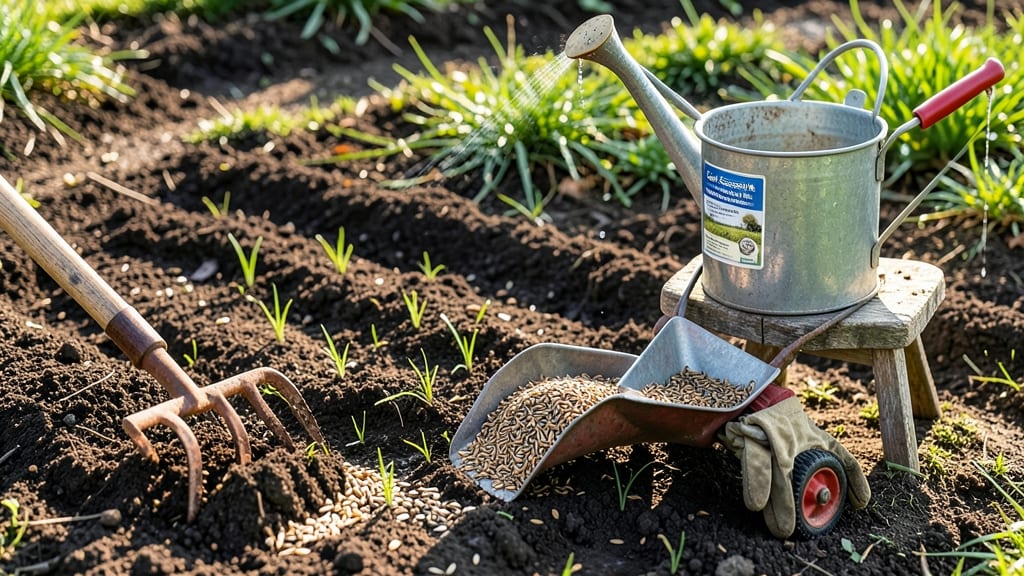
Planting grass seed in the fall is your best shot at a thicker, greener lawn—but get the timing wrong, and you’ll end up with weak roots or wasted seed.
The key? Knowing exactly when to plant based on your local climate and soil conditions, so your 🌱 sprouts have time to establish before winter sets in.
Most gardeners swear by the 4-6 week rule before the first frost, but that window shifts depending on whether you’re in the chilly North or milder South. Too early, and your seed might dry out; too late, and frost will stall growth.
I’ll break down the perfect timing for your region, plus how to check soil temps and moisture like a pro.
You’ll also discover why fall planting beats spring—cooler air, fewer weeds, and less competition for resources. Plus, I’ll share my top tips for preparing your soil and avoiding common mistakes that leave lawns looking patchy. Ready to grow grass that survives the winter and thrives in spring?
Let’s dive into the science and strategies that’ll turn your fall planting into a game-changer for next year’s lawn. No more guesswork—just lush, resilient grass that starts strong and stays that way.
Ideal soil temperature & weather conditions for fall grass seed planting
Fall planting gives grass seed a 6-8 week head start before winter dormancy—critical for strong roots. The sweet spot is when soil temperatures hover between 60-75°F, which triggers faster germination than spring planting. Cooler air temperatures (50-65°F) after planting help reduce weed competition and moisture loss.
Most grass varieties need 4-6 weeks of warm soil before the first frost to establish roots. If planted too early, seeds may sprout but struggle in hot soil. Too late, and frost will halt growth before roots develop.
This window typically falls in late summer to early fall, but exact timing depends on your USDA hardiness zone and local microclimates.
Rainfall is another key factor—1 inch of water weekly is ideal during germination. If your fall is dry, use a sprinkler system or soaker hoses to keep soil consistently moist. Overwatering, however, can suffocate seeds, so aim for deep but infrequent watering (1-2 times per week) once sprouts appear.
Daylight hours also play a role. Grass needs 12+ hours of daylight to photosynthesize efficiently. By late fall, shorter days can slow growth, so planting 6-8 weeks before frost ensures enough time for root development before dormancy sets in.
Here’s the golden rule: Plant when your local average first frost date is 6-8 weeks away. Check your USDA zone (e.g., Zone 5: late August; Zone 8: October) and adjust for high-altitude or coastal areas, which may have earlier frosts.
🌱
🌱 Fall Grass Seed Planting Summary
| Factor | Ideal Condition | Why It Matters |
|---|---|---|
| Soil Temperature | 60-75°F | Speeds germination and root growth |
| Air Temperature | 50-65°F | Reduces moisture loss and weed competition |
| Rainfall | 1 inch/week | Keeps soil moist for seedling establishment |
| Daylight Hours | 12+ hours | Supports photosynthesis for strong growth |
| Time Before Frost | 6-8 weeks | Allows roots to establish before dormancy |
To test your soil temperature, use a soil thermometer (insert 2-3 inches deep). If temps drop below 50°F, delay planting until conditions improve. In hot, dry climates, early fall (August-September) is best, while cooler northern regions may wait until late September or October.
Pro tip: Use a weather forecast app to track 10-day temperature trends. Look for a steady decline in highs (below 80°F) and consistent lows above 40°F
Once planted, avoid heavy foot traffic for at least 2-3 weeks to prevent seed displacement. Light mulching with straw or compost can help retain moisture and regulate soil temperature, especially in dry or windy conditions. 💧 Remember, fall-planted grass will go dormant in winter but emerge stronger in spring. The key is giving it enough time to develop deep roots before the ground freezes. With the right timing, you’ll skip the weed competition of spring planting and enjoy a thicker, greener lawn next season.
Fall planting deadlines by u.s. region (northern vs Southern states)
Your USDA hardiness zone is the #1 factor in determining fall planting deadlines. Northern states (Zones 3-6) have earlier frosts and shorter growing seasons, while Southern states (Zones 7-10) can plant later. Even within regions, microclimates like valleys or coastal areas may shift deadlines by 2-4 weeks.
For Northern states (Zones 3-6), aim to plant 6-8 weeks before your average first frost. In Zone 5 (e.g., Minnesota, Wisconsin), that’s typically late August to mid-September. Zone 4 (e.g., Maine, Michigan) may need to plant as early as mid-August to avoid frost.
High-altitude areas (e.g., Colorado mountains) can have earlier frosts, so plant by late July to early August.
In Southern states (Zones 7-10), you’ve got more flexibility. Zone 7 (e.g., Virginia, Tennessee) can plant until mid-October, while Zone 8 (e.g., Georgia, North Carolina) may go until late October or early November.
Even Zone 10 (e.g., Florida, Southern California) can plant in November, though growth slows as temps drop below 60°F.
Transition zones (Zones 6-7) like the Mid-Atlantic (Maryland, Delaware) or Midwest (Ohio, Indiana) offer a 6-8 week window from late August to mid-October. Check your local cooperative extension service for hyper-local deadlines—they account for rainfall patterns and soil types that can delay or accelerate planting.
🌱 Fall Grass Seed Planting Deadlines by U.S. Region
| USDA Zone | Northern States | Southern States | Deadline |
|---|---|---|---|
| Zones 3-4 | Minnesota, Maine, Montana | N/A | Mid-August |
| Zone 5 | Wisconsin, New York, Iowa | N/A | Late August - Mid-Sept |
| Zone 6 | Pennsylvania, Missouri | N/A | Late August - Early Oct |
| Zone 7 | Virginia, Tennessee | N/A | Late Sept - Mid-Oct |
| Zone 8 | North Carolina, Georgia | N/A | Late Oct - Early Nov |
| Zones 9-10 | Florida, California | N/A | November |
If you’re in a transition zone (e.g., Zone 6-7), err on the <