
How To
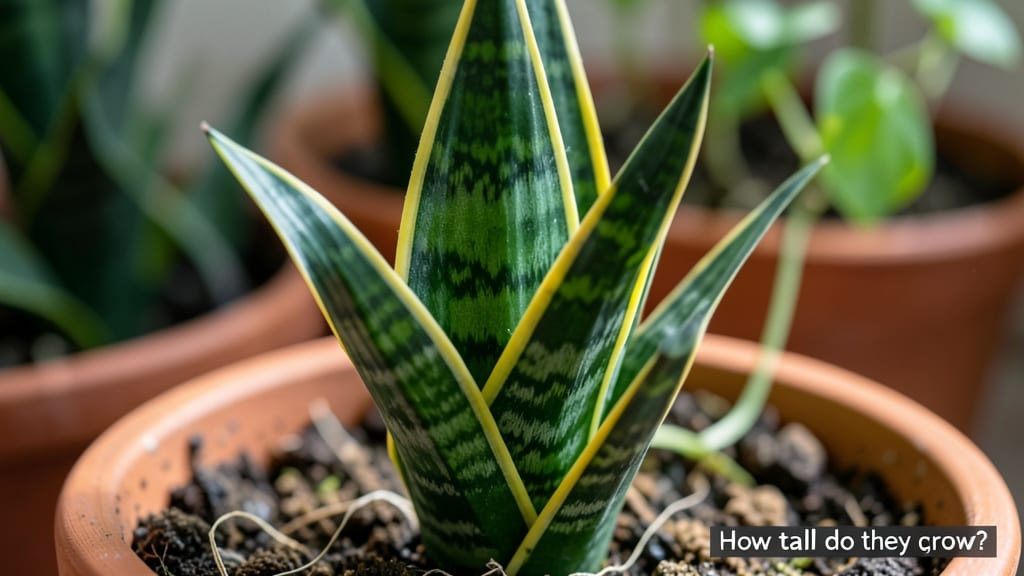
If you've ever wondered just how tall your snake plant 🌱 could grow before it becomes a towering green giant in your living space, you're not alone. This hardy houseplant is known for its slow-and-steady growth, but many people overestimate how much vertical space it'll actually need over time.
Understanding your snake plant's height potential is the key to giving it the perfect home. Most varieties top out between 2 to 4 feet tall, but some compact types stay closer to countertop height.
The good news? Their growth rate is so predictable you can plan your space around them without worrying about sudden vertical takeovers.
What you'll discover in this guide are the exact height ranges for popular varieties, plus the surprising factors that can make your snake plant grow taller—or stay shorter—than expected.
From light conditions to pot size, we'll cover everything you need to know to keep your plant happy and your space organized.
Whether you're dealing with a 3-foot 'Laurentii' reaching for the ceiling or a compact 'Moonlight' staying at desk height, you'll learn how to manage growth naturally. Let's explore how to give your snake plant the ideal conditions for healthy, controlled growth that fits perfectly in your home.


Snake plant height by variety: how tall do they grow?
Snake plants (Sansevieria) are known for their striking upright leaves and remarkable adaptability, but their mature height can vary dramatically depending on the variety.
If you're planning your space or choosing a new plant, knowing these height ranges will help you pick the perfect fit for your home or office. Most varieties reach their full height within 3 to 5 years, though some compact types grow much slower.
The most common species, Sansevieria trifasciata (often called 'Mother-in-Law's Tongue'), typically grows to 2 to 4 feet tall indoors. However, outdoor conditions can push some varieties even taller, especially in warm climates.
For example, the 'Laurentii' cultivar—with its iconic yellow-edged leaves—often maxes out around 3 feet, while the 'Futura Superba' can stretch up to 4 feet or more in ideal conditions.
If you're limited on vertical space, consider dwarf varieties like Sansevieria cylindrica (also called 'Cylinder Plant'), which rarely exceeds 1 to 2 feet in height. This variety has a more compact, rosette-like growth habit, making it ideal for small shelves or desks.
Another great option for tight spaces is Sansevieria zeylanica, which stays under 2 feet tall but spreads wider, creating a lush, low-profile look.
Here’s a quick comparison to help you visualize how different snake plant varieties will fit into your space:
| Variety | Mature Height (Indoors) | Growth Speed | Best For |
|---|---|---|---|
| Sansevieria trifasciata 'Laurentii' | 2–3 ft | Moderate (1–2 ft/year) | Living rooms, offices |
| Sansevieria trifasciata 'Futura Superba' | 3–4 ft | Slow to moderate | Statement plants, tall shelves |
| Sansevieria cylindrica | 1–2 ft | Very slow | Small spaces, desks |
| Sansevieria zeylanica | 1–2 ft | Slow | Bushy displays, ground cover |
| Sansevieria 'Moonshine' | 2–3 ft | Moderate | Bright spaces, modern decor |
When choosing a snake plant, consider not just its height but also its leaf width and spread. For instance, 'Futura Superba' has broad, sword-like leaves that can make the plant appear wider than its actual height.
Meanwhile, 'Moonshine' has thinner, more upright leaves, making it a better fit for narrow spaces like bookshelves or window sills.
If you're growing your snake plant outdoors in USDA Zone 9 or higher, expect it to grow 10–20% taller due to more sunlight and warmth.
In these climates, varieties like 'Hahnii' (often called 'Bird’s Nest Snake Plant') can spread wider than they grow tall, creating a stunning ground cover effect. Just be mindful of frost—snake plants are not frost-tolerant and will need to be brought indoors if temperatures drop below 50°F (10°C).
Pro tip: If you’re concerned about a snake plant outgrowing its space, opt for a smaller pot or root-bound conditions to naturally slow its growth. Snake plants are slow growers by nature, so even the tallest varieties won’t need repotting more than once every 2–3 years.
For a visual reference, imagine a standard kitchen countertop (about 36 inches or 3 feet tall). Most snake plants will fit comfortably under this height, making them versatile for both small apartments and larger homes.
If you’re still unsure, start with a dwarf variety—you can always propagate cuttings to grow taller plants later!
🌱
Factors that influence snake plant growth height and speed
Your snake plant’s height isn’t just about genetics—it’s heavily influenced by its environment. Light exposure is the biggest factor: bright indirect light encourages faster, taller growth, while low light slows it down significantly. Place your plant near an east-facing window for ideal growth without risking sunburn.
Pot size also plays a critical role. Snake plants in small pots grow slower because their roots are restricted, while larger containers (12+ inches) allow for more vigorous growth.
If you want to control height, keep it in a smaller pot—but ensure it has drainage holes to prevent root rot.
Temperature matters too—ideal ranges (60–85°F) promote steady growth, while cold drafts (below 50°F) shock the plant, slowing or halting growth entirely. Keep your snake plant away from AC vents or drafty windows to maintain consistent growth.
Soil type affects height indirectly by influencing root health. Well-draining, sandy soil prevents waterlogged roots, allowing the plant to focus energy on upward growth. Mix in perlite or orchid bark to improve drainage if your soil is heavy or clay-based.
Finally, fertilizer use can boost height—when used correctly. A balanced, diluted fertilizer (5-5-5 NPK) applied once in spring encourages taller, fuller growth. Avoid over-fertilizing, which can lead to chemical burns and stunted growth.
By adjusting these factors, you can encourage taller growth (for dramatic displays) or keep your snake plant compact (for small spaces). Experiment to find the perfect balance for your home! 🪴