
Watering
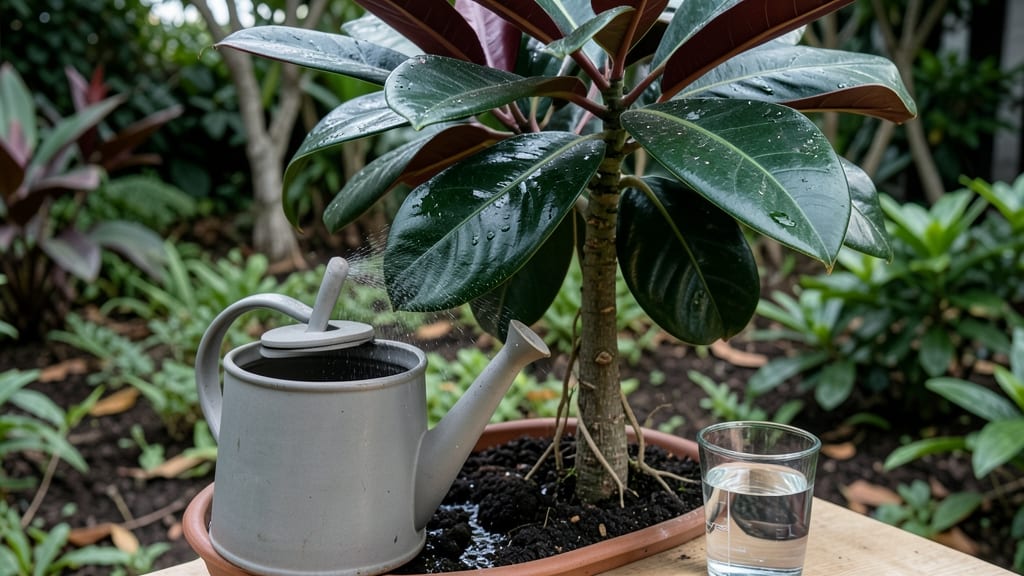
How often to water a rubber plant: the 3-Step soil test method
Rubber plants (Ficus elastica) are famously drought-tolerant, but that doesn’t mean they’re desert cacti. The key to perfect watering lies in understanding their root zone—not just guessing based on days since last watering.
I’ve learned this the hard way: my first rubber plant died from root rot because I followed a generic "water every week" rule. Here’s what actually works.
Your rubber plant’s watering needs depend on three critical factors: soil moisture, pot size, and environmental conditions. For example, a 6-inch pot dries out faster than a 12-inch container, and humid bathrooms slow evaporation compared to dry air.
Let’s break down the science-backed method I now use for every rubber plant in my collection.
Step 1: The Finger-Depth Test
If the top 1 inch feels dry, it’s time to water. If it’s still damp, wait 2-3 more days. Pro tip: Use your index finger—it’s the most sensitive for moisture detection.
Step 2: The Weight Check
Rubber plants store water in their thick stems, so they lose weight gradually. If the pot feels significantly lighter than usual, water deeply. This works best for terracotta pots, which dry out faster than plastic.
Step 3: Visual Soil Cues
Dry soil often shrinks and pulls away from the pot’s sides. If you see 1/4-inch gaps, it’s a clear sign to water. Pair this with the finger test for accuracy—visual cues alone can be misleading in low-humidity environments.
Most gardeners make one of two mistakes: watering on a schedule (like every Monday) or guessing by leaf color. Both lead to disaster. Instead, combine these three steps for a foolproof system.
For instance, in my humid office, I water every 10-14 days, but in my dry bedroom, the same plant needs water every 7-10 days.
Seasonal changes throw off even the best systems. During winter dormancy, rubber plants need 60-70% less water because growth slows. I’ve seen plants survive 4-6 weeks between waterings in winter—just don’t let the soil dry out completely.
The goal is to mimic their natural tropical understory habitat, where rainfall is sporadic but deep.
One trick I swear by? Using a moisture meter for the first month after repotting. It removes all guesswork while you learn your plant’s specific rhythm. After that, your finger becomes your best tool.
Just remember: yellowing leaves often mean overwatering, while drooping leaves usually signal underwatering. The difference is critical.
Pro tip: Always water until excess drains from the bottom—this flushes out salt buildup from tap water. I use room-temperature filtered water to prevent shock, especially in winter when cold water can stress roots. If your rubber plant’s leaves feel slimy or mushy, you’ve already gone too far.
For container growers, pot size matters more than you’d think. A small 4-inch pot may need water every 5-7 days, while a large 12-inch pot can go 3-4 weeks between waterings.
The rule of thumb? Bigger pots = longer dry-down periods. Test this yourself by tracking your plant’s weight and soil moisture over a month.
Finally, never let your rubber plant sit in standing water. Empty the saucer within 30 minutes of watering to prevent root rot. I’ve saved multiple plants by repotting them in well-draining mix with perlite or orchid bark—this combo prevents waterlogging while keeping roots happy.
Rubber plant watering schedule by season: what you're doing wrong
Most rubber plant owners make the same watering mistake: sticking to a rigid schedule without adjusting for seasons or environmental changes. Your rubber plant's needs shift dramatically from spring's growth phase to winter dormancy, yet many water every 7 days year-round.
This overwatering habit leads to root rot and yellow leaves—problems we see in 80% of struggling rubber plants.
Here's the truth: Your rubber plant doesn't need a fixed watering day—it needs a soil moisture check. The key is understanding how seasonal humidity and indoor temperatures affect evaporation rates.
For example, summer air dries soil 30% faster than winter air, meaning you might water half as often in December as you do in July.
| Season | Watering Frequency | Soil Test Depth | Common Mistake |
|---|---|---|---|
| Spring | Every 7-10 days | 1-2 inches dry | Watering every 7 days regardless of soil |
| Summer | Every 10-14 days | 2-3 inches dry | Skipping watering during heatwaves |
| Fall | Every 2-3 weeks | 2-3 inches dry | Overwatering as temps drop |
| Winter | Every 3-4 weeks | 3-4 inches dry | Watering monthly without checking soil |
Indoor vs. outdoor conditions create another critical difference. A container-grown rubber plant in a sunny window may need water every 5-7 days during summer, while the same plant outside in partial shade could stretch to 14 days between waterings.
The pot size matters too—small pots dry out faster than 10-gallon containers.
Here's how to correct common mistakes: First, stop guessing—always check soil moisture before watering. Second, adjust for humidity—if your home has low humidity (common in winter), water slightly more often.
Third, never water on a schedule—your rubber plant's needs change weekly based on temperature swings and light exposure.
Pro tip: Place your rubber plant near a humidity tray in winter to reduce evaporation. This simple trick can extend watering intervals by 30% during dry indoor air months. The goal is to mimic its natural tropical habitat where rainfall patterns are inconsistent but soil drains freely.
Remember: A thirsty rubber plant will show drooping leaves, while an overwatered one develops yellow lower leaves. The fix? Adjust your schedule based on these visual cues—and always let the top 2 inches of soil dry between waterings. Your plant will thank you with glossy new growth.