
Plants
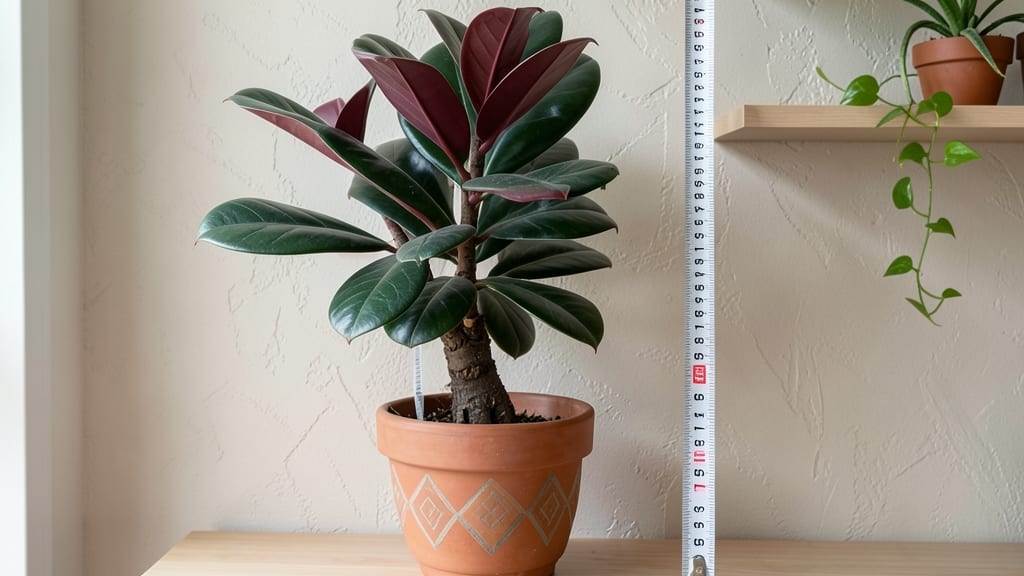
If you're wondering how tall a rubber plant 🌿 can grow, the answer might surprise you—some varieties reach heights of 10 feet or more, while others stay compact and manageable.
Whether you're dreaming of a lush, floor-to-ceiling statement plant or prefer a smaller, tabletop-sized variety, understanding your rubber plant's growth potential is the first step to creating the perfect indoor jungle.
Most rubber plants grow at a steady pace, adding 1-2 feet per year under ideal conditions. By year three, many varieties hit their mature height range of 6-10 feet, making them a stunning vertical feature in any room.
But don’t worry—if ceiling-height growth isn’t your style, there are dwarf and semi-dwarf varieties that stay between 3-5 feet, perfect for smaller spaces or apartment living.
The key to controlling your rubber plant’s height lies in light, pruning, and pot size. Too much sunlight can stretch stems, while proper pruning keeps your plant bushy and at your desired height.
I’ll show you exactly how to manage growth so your rubber plant stays the perfect size—whether you want a compact statement piece or a towering indoor tree.
Ready to learn how to nurture your rubber plant for the ideal height? Let’s dive into the varieties, care tips, and pruning tricks that will help you achieve the perfect plant for your space—no matter how tall (or short) you want it to grow.


Rubber plant height limits by popular variety (with growth charts)
Rubber plants (Ficus elastica) are prized for their bold, glossy leaves and striking growth patterns, but their mature height can vary dramatically depending on the variety and growing conditions.
If you're planning your indoor garden, knowing these height limits will help you choose the right plant for your space—whether you want a compact tabletop specimen or a tall statement plant that reaches for the ceiling.
Most rubber plants grow 6 to 10 feet tall indoors with proper care, but some dwarf varieties stay as short as 3 feet, making them perfect for apartments or small offices.
The key to managing their height lies in light exposure, pruning, and pot size, all of which we’ll explore in this section. Let’s break down the most popular varieties and their typical growth ranges.
🌿 Visual Comparison: Below is a quick reference table showing how different rubber plant varieties compare in height, along with their ideal growing conditions. This will help you visualize which type fits your space and lifestyle.
The 'Black Prince' variety, with its deep purple-black leaves, is one of the fastest growers, often reaching 10 feet tall indoors if left unpruned. On the other hand, the 'Tineke' variety, with its striking pink-and-white variegation, stays compact at 3–5 feet, making it ideal for desks or shelves.
If you’re working with limited vertical space, pruning regularly can help keep even the taller varieties in check.
One common misconception is that rubber plants grow too quickly to manage. In reality, their growth rate slows significantly after the first 2–3 years, allowing you to control their height with strategic pruning and light adjustments.
For example, placing your plant in lower light will slow its vertical growth, while bright indirect light encourages faster (but more manageable) growth.
For outdoor cultivation in USDA zones 6–11, rubber plants can grow even taller—up to 15 feet—when planted in the ground. However, they’re not cold-hardy and must be brought indoors if temperatures drop below 50°F.
Most gardeners keep them as indoor plants year-round for their air-purifying benefits and low-maintenance nature.
If you’re unsure which variety to choose, consider your room’s height and layout.
A 6-foot ceiling might limit you to dwarf varieties like 'Ruby Red' or 'Tineke', while a 10-foot ceiling (like in a living room or atrium) can accommodate the full height of a 'Black Prince' or standard 'Burgundy'. Always measure your space before purchasing to avoid disappointment.
Pro tip: Use a growth chart to track your rubber plant’s progress. Measure its height every 3–6 months and adjust its care routine based on its growth rate. For instance, if it’s growing too fast, reduce light exposure or prune the top to encourage bushier growth.
Next, we’ll dive into how to control rubber plant height for small spaces, including pruning techniques and pot size strategies that can keep your plant at your desired height—whether that’s 3 feet for a desk or 8 feet for a statement piece. ✂️
How to control rubber plant height for small spaces
If your rubber plant (Ficus elastica) is reaching for the ceiling, don’t worry—there are simple ways to manage its height without sacrificing its lush, glossy leaves. The key is understanding how light exposure, pruning techniques, and pot size influence growth.
With the right adjustments, you can keep your plant at a 3–5 ft height for apartments or let it grow taller for a bold statement.
Start by assessing your plant’s current growth rate. Rubber plants typically grow 1–2 ft per year indoors, but this can double with optimal conditions. If your space is limited, focus on controlling vertical growth while encouraging bushier, fuller foliage. This approach keeps your plant manageable while still thriving.
Here’s how to adjust your care routine to fit your space:
For dwarf varieties like ‘Burgundy’ or ‘Black Prince’, these techniques are even more effective. These types naturally stay shorter (3–5 ft), making them perfect for small spaces.
If you’re growing a standard variety like ‘Tineke’ or ‘Variegata’, pruning and light control will help you maintain a 5–8 ft height without overwhelming your room.
Remember, rubber plants are resilient. Even if you prune aggressively, they’ll bounce back with vibrant new growth. Use the cuttings from pruning to propagate new plants—it’s a great way to expand your collection without spending a dime! 🌱