
How To
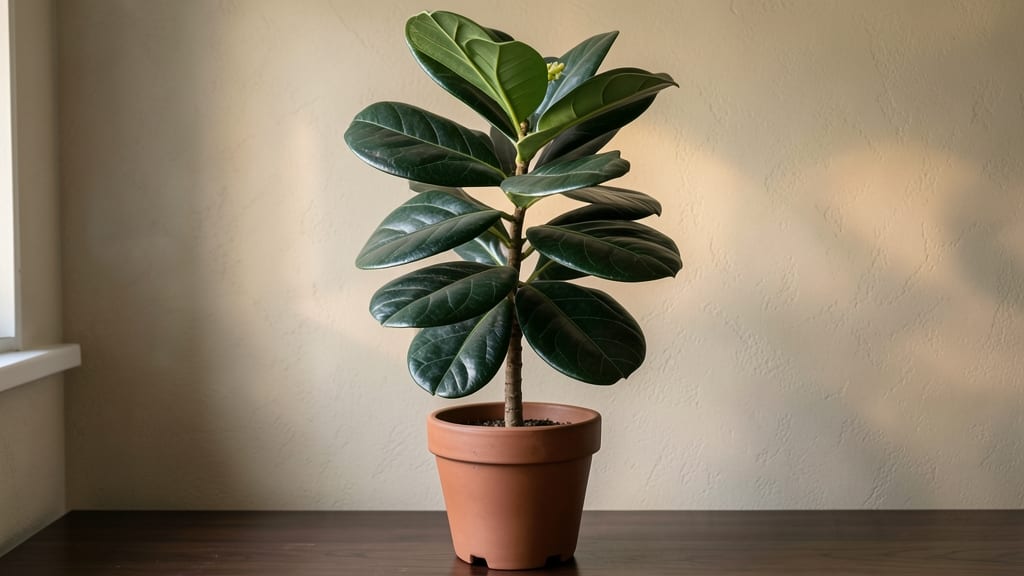
If you've ever wondered just how tall your rubber plant 🌿 could grow, you're not alone—many plant parents are surprised by its rapid vertical growth indoors.
This popular houseplant can reach heights of 10 feet or more with the right conditions, turning your living space into a mini jungle if left unchecked.
The key to managing its size lies in understanding what influences growth—light exposure, pot size, and even pruning habits all play a role. Whether you're dealing with a towering standard variety or a more compact dwarf type, knowing these factors helps you shape your plant's future height.
In this guide, I'll break down exactly what to expect from your rubber plant's growth journey, from its first year to full maturity. You'll also discover simple techniques to control its height, so you can enjoy its lush foliage without sacrificing shelf space.
Let's dive into the secrets of keeping your rubber plant at your ideal height—whether that means letting it stretch toward the ceiling or trimming it to stay manageable.


Natural height limits of rubber plants indoors: what to expect
Rubber plants (Ficus elastica) are known for their dramatic growth indoors, often reaching heights that can dwarf your living space if left unchecked.
On average, these tropical plants grow between 6 to 10 feet tall indoors, though some varieties like the Robusta or Burgundy can stretch even taller—up to 12 feet—when given ideal conditions. The key factors influencing their height include light exposure, pot size, and pruning habits.
If you're curious about your plant's potential, consider its growth rate. Rubber plants typically grow 1 to 2 feet per year indoors, with rapid spurts during spring and summer.
For example, a 1-year-old plant might stand at just 2 to 3 feet, while a 3-year-old specimen could tower over 6 feet. Outdoor rubber plants, however, can grow even taller—sometimes exceeding 15 feet—when planted in gardens with ample space.
Your rubber plant's height also depends on its variety and care conditions. Dwarf varieties like 'Tineke' stay shorter (3 to 5 feet), while standard types like 'Variegata' reach their full height potential.
Even small differences in light exposure or fertilizer use can accelerate growth, so monitoring these factors is essential for managing size.
🌱
One common misconception is that rubber plants grow at the same rate regardless of their environment. In reality, indoor rubber plants grow slower than their outdoor counterparts due to limited space and controlled conditions.
For instance, a rubber plant in a small 6-inch pot will struggle to exceed 4 feet, while the same plant in a 12-inch pot with bright light can easily reach 8 feet in just a few years.
To predict your rubber plant's height, observe its leaf size and spacing. Larger leaves and wider spacing between nodes (the bumps where leaves grow) indicate faster vertical growth.
For example, the 'Black Prince' variety grows more compactly, with leaves spaced 2–3 inches apart, while the 'Variegata' stretches taller with leaves spaced 4–6 inches apart.
If you're concerned about your rubber plant outgrowing its space, focus on light placement and pot size. Positioning it near an east or west-facing window provides ideal bright indirect light without promoting excessive height.
Conversely, placing it in a dark corner will stunt its growth, keeping it under 3–4 feet but with smaller, less vibrant leaves.
Another factor to consider is the age of your plant. Young rubber plants grow more slowly, while mature plants (over 3 years old) can add 2–3 feet per year if given the right care.
For example, a 5-year-old rubber plant in optimal conditions might reach 10 feet tall, while a neglected one could stay under 5 feet.
🌿
Understanding your rubber plant's growth potential helps you plan for its future. Whether you're aiming for a compact centerpiece or a tall statement plant, adjusting care practices like pruning and light exposure can shape its height.
In the next section, we'll explore how to control rubber plant height using simple techniques like pruning and training.
How to control rubber plant height: pruning & training techniques
If your rubber plant is reaching for the ceiling faster than you’d like, don’t panic! With the right techniques, you can control its height while encouraging a fuller, bushier shape.
Pruning and training are your best tools to keep your plant at a manageable size—whether you prefer a compact tabletop plant or a tall, elegant statement piece.
Start by understanding that rubber plants grow best during spring and summer, when they’re actively pushing new growth. This is the ideal time to prune, as the plant can recover quickly and produce fresh leaves. Avoid heavy pruning in fall or winter, when growth slows down.
For a bushier plant, focus on pinching back the top growth. Simply snip off the top few inches of the stem just above a leaf node (where leaves grow).
This encourages side shoots to form, creating a fuller, wider plant. Repeat this process every few months to maintain your desired shape.
🌿
Step-by-Step Pruning Guide
- 1 Choose the right time: Prune in early spring or after flowering (if applicable) to promote new growth.
- 2 Use clean tools: Sterilize scissors or pruners with rubbing alcohol to prevent disease spread.
- 3 Cut at a 45-degree angle: Trim stems just above a leaf node to encourage branching.
- 4 Propagate cuttings: Place stem cuttings in water or soil to grow new plants.
- 5 Support tall plants: Use stakes or trellises to guide vertical growth and prevent bending.
Another effective method is training your rubber plant to grow along a trellis, stake, or even a moss pole. This not only controls height but also adds an attractive, structured look.
Simply tie the main stem to the support as it grows, guiding it upward while encouraging lateral branches to form.
For those who love the look of a tall, single-stem rubber plant, avoid heavy pruning and instead focus on removing only the lower leaves that yellow or die back.
This keeps the plant elegant while maintaining its height. Just be sure to provide adequate light and support to prevent leaning or falling.
With consistent care, your rubber plant can stay at your desired height—whether that’s a compact 3-foot tabletop plant or a dramatic 10-foot indoor tree. The key is balancing pruning, training, and seasonal adjustments to keep it happy and healthy.