
Plants
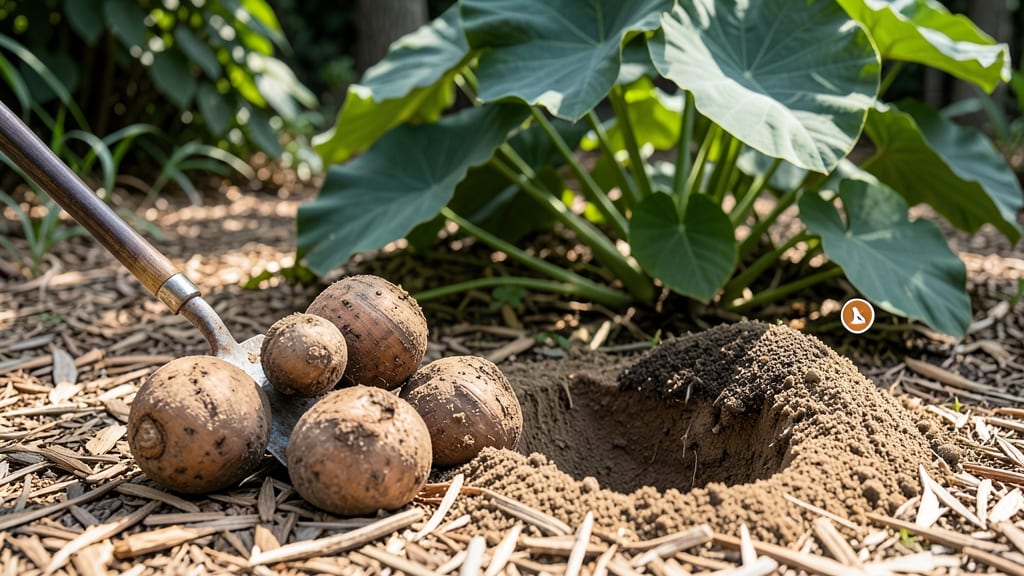
Planting elephant ear bulbs in Texas at the wrong time can mean the difference between a showstopping garden and a sad, shriveled disappointment. These tropical beauties 🌿 crave warmth, so timing matters more than you might think—especially when late frosts can still sneak up in March.
Most Texas gardeners wait until after the last frost date, typically between March and May, when soil temperatures finally climb above 60°F.
But here's the catch: if you're in North Texas (zone 8a), you might need to hold off until early April, while South Texas (zone 10a) gardeners can plant as early as late February.
Why does this matter? Because elephant ears won't tolerate cold soil—they need warmth to sprout properly. Plant too early, and you risk stunted growth or worse. But get it right, and you'll be rewarded with those dramatic, glossy leaves all summer long.
Let me walk you through the exact timing tricks that work in Texas' heat zones, plus how to prep your soil for success. You'll learn when to plant, how deep to bury those tubers, and the best shade spots to keep them thriving—no guesswork required.
Texas heat-Zone planting calendar for elephant ear bulbs
Texas's diverse climate—from the cooler Hill Country to the sweltering Gulf Coast—means one-size-fits-all planting advice won’t work for elephant ear bulbs (Colocasia spp.). These tropical beauties thrive when planted after the last frost date, but Texas’s variable frost zones (8a-10a) complicate timing.
For example, North Texas (Zone 8a) can see late frosts in March, while Houston (Zone 9a) might be frost-free by February. Let’s break down the perfect planting window for each Texas region.
Elephant ear bulbs are not true bulbs but tubers, similar to potatoes. They need warm soil (60°F+) to sprout, so rushing them into cold ground guarantees failure.
In Texas, this means waiting until soil temperatures consistently stay above 60°F, which typically aligns with late March to early April in most zones. However, South Texas gardeners (Zone 10a) can plant as early as February, while West Texas (Zone 8a) may need to wait until mid-April.
Here’s the golden rule: Plant elephant ear bulbs 2-4 weeks after your region’s last average frost date. This buffer ensures your tubers aren’t caught off guard by a late cold snap.
For instance, if your average last frost date is March 15, aim for April 1 to be safe. Use your local Cooperative Extension Service frost maps to pinpoint your exact timing.
Another critical factor is daytime temperatures. Elephant ears hate cold snaps, even after planting. In North Texas, where nights can still dip below 40°F in April, consider starting bulbs indoors in biodegradable pots 4-6 weeks before your target outdoor date.
This head start gives them a 3-inch jump** on growth before transplanting.
| Texas Region | USDA Zone | Last Frost Date | Ideal Planting Window | Soil Temp Threshold |
|---|---|---|---|---|
| North Texas (Dallas/Fort Worth) | 8a | March 15 | April 15 - May 1 | 60°F+ (consistent) |
| Central Texas (Austin/San Antonio) | 8a-8b | March 1 - March 15 | March 20 - April 15 | 60°F+ (consistent) |
| East Texas (Tyler/Longview) | 8a-8b | March 1 - March 10 | March 15 - April 1 | 60°F+ (consistent) |
| Houston/Galveston (Coastal) | 9a | February 15 | February 28 - March 15 | 60°F+ (consistent) |
| South Texas (Corpus Christi) | 9a-9b |
5 Critical signs your Texas soil is ready for elephant ear bulbsElephant ear bulbs (Colocasia spp.) thrive in Texas when the soil hits the right temperature and moisture balance. Unlike cool-season crops, these tropical plants demand warm soil—ideally between 65°F and 75°F—to prevent rot and encourage vigorous growth. Here’s how I verify my soil is ready before planting. First, check the soil temperature with a simple thermometer probe (available at garden centers). Dig 3-4 inches deep—this is where your bulbs will sit—and wait for readings above 60°F. In North Texas, this usually happens by mid-April, while South Texas may hit it as early as late March. Pro tip: Morning is the best time to test, as afternoon sun can skew readings high. Next, assess moisture by squeezing a handful of soil. It should feel damp but not soggy. Elephant ears hate waterlogged soil, which is common in Texas’ heavy clay. If your soil is too wet, amend it with compost or sand to improve drainage. I often test this by digging a small hole, filling it with water, and checking if it drains within 30 minutes—perfect for these moisture-loving plants. 🌱 🔍 5 Critical Signs Your Soil Is Ready
Don’t overlook the pH test, either. Elephant ears prefer slightly acidic to neutral soil (pH 6.0-7.0). Grab a soil test kit ($10 at garden stores) or send a sample to your local Texas AgriLife Extension. In my clay-heavy East Texas garden, I’ve had to amend with pine fines or sulfur to lower pH before planting. Finally, observe the local microclimate. If your yard has afternoon shade from oak trees or a northern exposure, you can plant 2-3 weeks earlier than the general guideline. I once planted bulbs in a shaded spot in May and still got 3-foot foliage by summer—proof that timing isn’t one-size-fits-all in Texas. Once your soil passes these tests, it’s time to plant! Remember: Elephant ears grow best in rich, organic soil, so mix in compost or aged manure at planting. This tropical beauty will reward you with bold, heart-shaped leaves all summer long—if you give it the right start. |