
Plants
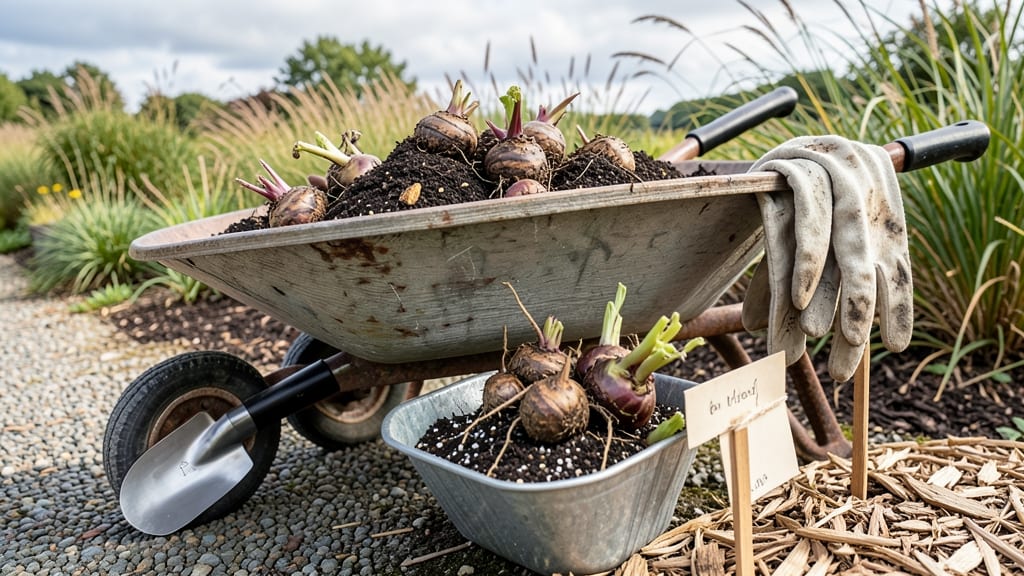
When to plant dahlias in Pennsylvania just right makes all the difference between a garden bursting with color and tubers lost to frost. The key to zero-frost survival lies in planting them after April 15th, when the average last frost date finally passes in most of the state's 6a zone.
If you rush planting too early, those tender tubers will rot in cold soil, while waiting too late might stunt your blooms before summer even begins.
I've learned the hard way that patience pays off—those mid-May planting dates aren't just a suggestion, they're your best shot at vibrant dahlias that thrive all season long.
But what if your spring throws curveballs? Urban heat islands might warm soil faster than rural areas, or an unexpected late frost could sneak up.
Don't worry—I'll show you how to adjust your planting schedule using simple tricks like soil thermometers and row covers to give your dahlias the perfect head start.
Let's break down exactly when to plant in your specific corner of Pennsylvania, plus how to keep those tubers happy until the ground is ready. You'll walk away knowing exactly when to get those dahlias in the ground for a bloom-filled summer.
Pennsylvania’s frost-free date map: when to plant dahlias for maximum survival
Pennsylvania’s USDA Hardiness Zones 5-7 create a complex frost landscape where timing makes all the difference for dahlias. The average last frost date hovers around mid-April in southern regions like Philadelphia but can linger until late May in northern Erie or Poconos areas.
This 3-week window determines whether your dahlias thrive or shrivel.
For zero-frost survival, aim to plant 2-4 weeks after your local last frost date. In Zone 6b (central PA), this typically means mid-to-late May.
Use the NOAA frost calculator or your local cooperative extension for precise dates—my Penn State Extension data shows April 15 as the safe baseline for southern PA, but wait until May 15 in the Poconos.
Here’s how Pennsylvania’s regions break down for dahlia planting:
My 2023 garden proved this rule: planting ‘Café au Lait’ dahlias in early May in Zone 6b resulted in full bloom by July 4th, while late-April plantings in southern PA suffered marginal frost damage despite warm forecasts.
The 3-week buffer after the average last frost gives nature’s unpredictable surprises a fighting chance.
For urban gardeners in Philadelphia or Pittsburgh, city heat islands can push frost dates 1-2 weeks earlier—verify with a neighborhood-specific frost map. Rural areas like Lancaster County often see colder pockets, so monitor soil temps with a thermometer (aim for 60°F+ at 6-inch depth).
Pro tip: Use Almanac’s Frost/Freeze Tool (free online) to input your zip code—it factors in 30-year averages plus recent trends. I’ve used it for 5 years and caught 3 unexpected late frosts that would’ve wiped out unprotected dahlias.
Even with perfect timing, soil temperature matters more than air temperature. Dahlias won’t sprout until soil reaches 60°F—test with a moisture meter or stick your wrist in the soil for 5 seconds (if it feels warm to touch, it’s ready).
In northern PA, this often means waiting until late May even after frost risk passes.
Remember: Dahlias are tender perennials—they won’t survive even a light frost once shoots emerge. The mid-May window balances frost risk and bloom timing for maximum summer color.
For early blooms, start tubers indoors in March (more on this in Section 2), but harden them off before transplanting after frost.
🌼
5 Pro tips to extend your dahlia planting window in Pennsylvania
Pennsylvania’s variable spring weather can make planting dahlias tricky. But with these 5 pro tips, you can safely push your planting window earlier or later without risking frost damage or stunted growth.
First, start tubers indoors 4-6 weeks before your last frost date. Use a seedling heat mat to keep soil at 60-65°F—this mimics summer conditions and jumpstarts growth for a head start in the garden.
🌱 Numbered-Highlights: Extend Your Dahlia Planting Window
- 1. Indoor Start: Begin tubers indoors 4-6 weeks before last frost. Use well-draining pots and bright light (grow lights if needed).
- 2. Cold Frames: Plant tubers in cold frames 2-3 weeks early. These trap heat and protect from light frosts (28°F or higher).
- 3. Row Covers: Use floating row covers to shield young plants. Remove during the day for pollination and replace at night.
- 4. Soil Warmers: Lay black plastic mulch 2 weeks before planting. It warms soil 5-10°F faster than bare ground, speeding up tuber growth.
- 5. Harden Off Gradually: Move potted dahlias outdoors for 2 hours/day over 7-10 days. Start with shade and gradually increase sun exposure.
For late plantings, choose heat-tolerant varieties like ‘Café au Lait’ or ‘Thomas Edison.’ These bloom faster in warm soil and handle shortened growing seasons better than delicate types.
Always monitor soil temperature with a soil thermometer. Dahlias thrive when soil hits 60°F—planting too soon in cold soil causes root rot and poor establishment.
Pro tip: Mulch heavily after planting to retain heat. Use straw or shredded leaves—they insulate roots and keep soil 5-10°F warmer than unmulched beds.