
Plants
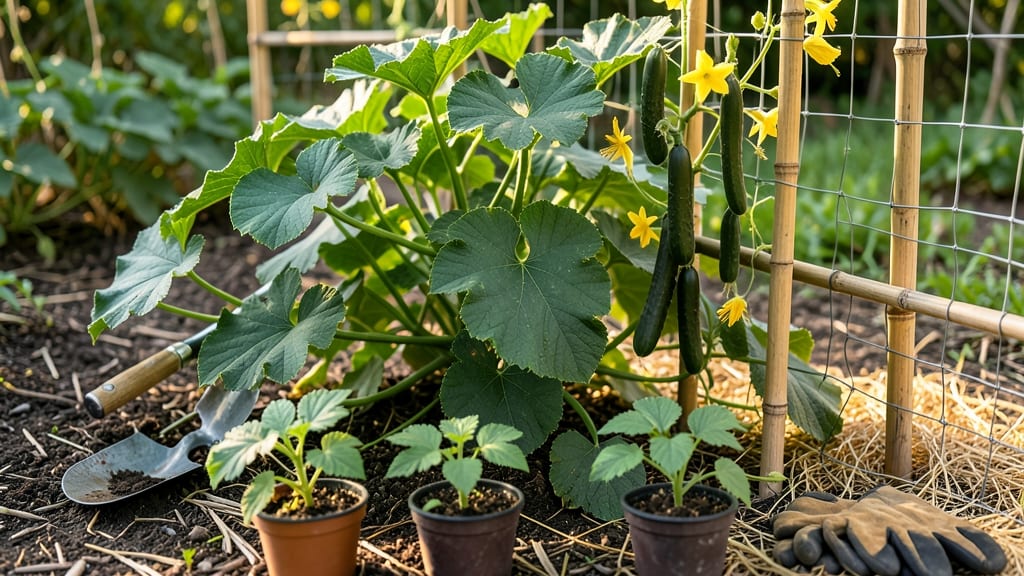
Planting cucumbers 🥒 in New Hampshire isn't just about waiting for spring—it's about catching that narrow frost-free window between mid-May and early June when the soil finally warms up to at least 60°F.
Get it wrong, and you'll either lose your plants to late frosts or watch them struggle in cool soil, leaving you with bitter fruit instead of crisp, sweet harvests.
I've learned the hard way that NH's microclimates—whether you're near the coast, tucked in the White Mountains, or somewhere in between—can shift those perfect planting dates by 2 weeks. The coastal areas might be ready by late May, while inland spots could need to wait until early June.
Knowing your zone and watching for those last frost warnings makes all the difference.
What if you could extend that window even further? With the right strategies—like using black plastic mulch to warm the soil faster or choosing heat-tolerant varieties—I'll show you how to push your cucumbers to produce from July right through September, even in our shorter growing season.
Let's break down exactly when to plant in your corner of NH, which varieties thrive here, and how to protect your vines from the quirks of our unpredictable weather. Your perfect 🥒 harvest starts with timing it just right.
New Hampshire’s frost-free planting zones for cucumbers by microclimate
New Hampshire’s diverse geography means your cucumber planting timeline depends heavily on where you live. The state’s three main microclimates—coastal, inland/lakes region, and White Mountains—each have distinct last frost dates and growing seasons.
Cucumbers (Cucumis sativus) thrive in warm soil and air, so timing is everything to avoid frost damage or wasted effort.
For all regions, aim to plant cucumbers only after the soil temperature reaches at least 60°F and all risk of frost has passed. Coastal areas warm up faster, while mountain regions stay cooler longer. Let’s break down your exact planting window based on your location in NH.
📅 Key Dates to Know:
• Average last frost date: May 15 (varies yearly) • First frost date: October 15 (varies yearly) • Frost-free growing season: ~165 days • Optimal planting window: Mid-May to early June
| Microclimate | Last Frost Date | Safe Planting Window | Heat-Tolerant Varieties | Notes |
|---|---|---|---|---|
| Coastal (Portsmouth, Dover) | Late April - Early May | Late April to mid-May | 'Straight Eight', 'Marketmore' | Warmer microclimate; can plant earlier |
| Inland/Lakes (Concord, Manchester) | Mid-May | Early to mid-May | 'Boston Pickling', 'Lemon' | Moderate climate; stick to window |
| White Mountains (North Conway, Gorham) | Late May - Early June | Late May to early June | 'Suyo Long', 'Tyria' | Cooler; choose fast-maturing varieties |
🌱 Pro Tip: Use a soil thermometer to confirm soil is warm enough before planting.
If you’re in the coastal region, you can start planting as early as late April, but wait until mid-May for inland areas. Mountain gardeners should hold off until late May or early June to avoid frost.
Always check your local NH Agricultural Experiment Station for updated frost dates each year, as they can shift by 1-2 weeks.
For direct sowing (planting seeds outdoors), wait until 2 weeks after your last frost date to give young plants time to establish. If you start indoors, transplant seedlings outdoors 1-2 weeks after your safe planting window begins. This gives them time to acclimate to outdoor conditions.
Choose heat-tolerant varieties like 'Straight Eight' or 'Suyo Long' to extend your harvest window. These varieties perform better in NH’s shorter growing season. Pair them with black plastic mulch to warm the soil faster and protect against late frosts.
Remember, cucumbers are warm-season crops that won’t tolerate cold soil. If you plant too early, your seeds may rot or your seedlings may wilt. Use row covers or a cold frame to create a warmer microclimate if needed, but remove them once flowers appear to ensure pollination.
🌿 Quick Check: Test your soil temperature with a thermometer—it should read 60°F or higher at a depth of 2 inches before planting.
5 Proven strategies to extend your cucumber growing season in NH
New Hampshire’s short growing season (just 165 frost-free days) can feel like a race against time for cucumbers. But with these 5 battle-tested strategies, I’ve pushed my harvests weeks earlier and later than the typical May-June window.
The key? Combining heat protection with smart variety selection—here’s exactly how I do it.
First, start seeds indoors 3-4 weeks before your last frost date (typically mid-May for most of NH). Use grow lights to give seedlings 12-14 hours of light daily—this jumpstarts vines so they’re ready to hit the garden as soon as soil warms to 60°F+.
I swear by heat mats under seed trays to speed up germination in our cool springs.
🚨 CRITICAL INSIGHT: Coastal NH gardeners (like Portsmouth) can plant 2 weeks earlier than inland areas (Concord, Manchester), while White Mountain regions (North Conway) may need to wait until late May or early June. Always check your local USDA Zone 5a-6b frost data—it’s your planting GPS.
Pro tip: Pair these strategies with drip irrigation to maintain consistent moisture—cucumbers hate fluctuating water levels. I set up my system on timers to deliver 1-2 inches of water weekly, and my vines stay happy and productive even during NH’s dry spells.
Remember, soil temperature matters more than air temperature. Use a soil thermometer—plant only when readings hit 60°F+ at 4-inch depth. This simple tool has saved me from failed plantings more times than I can count.
With these tactics, you’ll turn NH’s short season into a long harvest—no more sad, underperforming vines!