
Plants
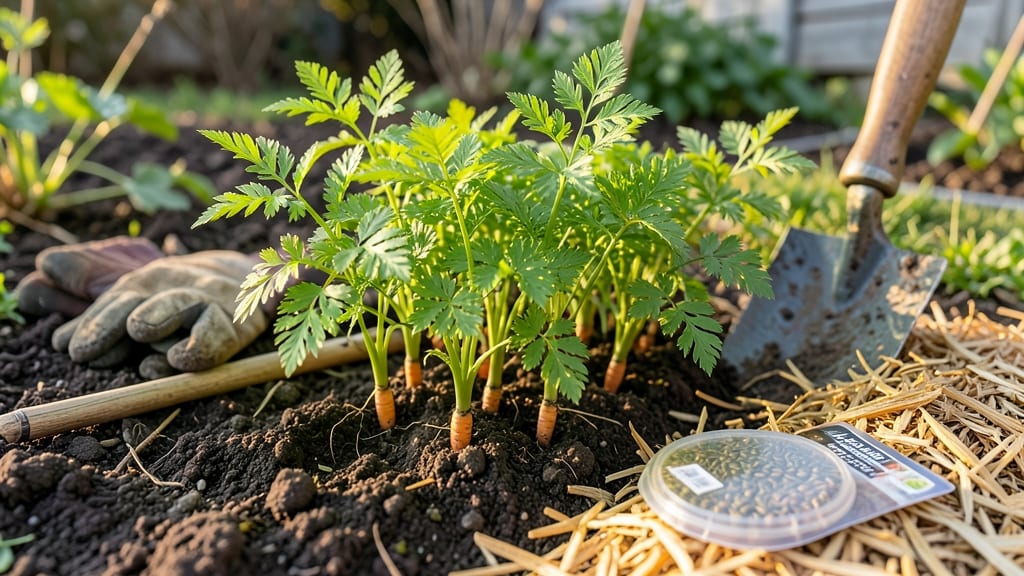
Timing your fall carrot planting just right can mean the difference between sweet, crisp roots and bitter disappointment. The key lies in understanding your local frost dates and soil temperatures—because planting too early or too late throws off your entire harvest schedule.
In USDA Zone 6a, where I garden, the magic window opens around mid-August to early September—8 to 12 weeks before the first frost. But here’s the catch: soil needs to stay warm enough (between 55°F and 75°F) for seeds to germinate properly.
Get this wrong, and you’ll end up with slow starts or stunted growth.
What I’ve learned is that fall carrots thrive when you align planting with both soil warmth and daylight. Too much heat stress? Roots bolt. Too cold? Seeds refuse to sprout. The solution? A little planning—and knowing your last frost date like the back of your hand.
Let’s break down exactly how to calculate your perfect planting window, from soil prep to frost protection. By the end, you’ll know exactly when to plant for a bumper crop of 🥕 that tastes like summer all fall long.
Fall carrot planting timeline by climate Zone: soil temp & frost rules
Timing is everything when planting carrots in the fall. The key is to sow seeds 8-12 weeks before your first frost date, ensuring roots mature before cold sets in. For most USDA zones, this means planting between mid-July and early September, but exact dates vary by location.
I’ll break down the science-backed windows for zones 3-10, including soil temperature rules and frost-free calculations.
Carrots need 55-75°F soil temperatures to germinate and grow properly. If your soil is too cold, seeds rot; too hot, and they bolt prematurely. Most gardeners achieve ideal conditions in fall by planting after summer’s peak heat subsides.
The 80-100 day rule is your best friend: count backward from your first frost date to determine your planting window.
Here’s how to calculate your perfect window: Find your average first frost date (check the USDA frost map), subtract 80-100 days (carrots’ maturity range), and plant seeds within that range.
For example, in Zone 6a, with a first frost around November 15, aim to plant between mid-August and early September for a late fall harvest.
Soil temperature is non-negotiable. Use a soil thermometer to confirm warmth before planting. If your soil is below 55°F, wait a week or two—carrots won’t germinate in cold soil. In warmer zones (like Zone 9-10), you can plant as late as October, but monitor for early frosts.
🌱Regional microclimates can shift your window by 2-4 weeks. For example, coastal areas stay warmer longer, while inland zones cool faster. I recommend planting a test row 2 weeks early to gauge germination success.
If your soil stays warm late, you might push planting into early October—just monitor for early frosts.
Don’t overlook succession planting to extend your harvest. In zones 5-8, sow new seeds every 2-3 weeks from July through September. This ensures a steady supply of baby carrots (harvest at 50-60 days) and mature roots (harvest at 70-90 days
Protect your investment with row covers or mulch if early frosts threaten. A simple straw mulch layer can delay frost damage by 2-3 weeks, giving carrots extra time to sweeten. In colder zones, opt for cold-hardy varieties like 'Chantenay' or 'Paris Market,' which tolerate light frosts better than standard types. Remember: Soil prep is half the battle. Work in compost or aged manure before planting to improve drainage and loosen soil. Carrots hate compacted or rocky soil—amend with sand or perlite if needed. A smooth, stone-free seedbed ensures straight, sweet roots. Your fall carrot harvest depends on three critical factors: soil warmth, frost timing, and variety choice. Master these, and you’ll enjoy crisp, flavorful carrots straight from your garden well into winter. Start with the right timing, and the rest is just good gardening.
3 Critical factors that determine your fall carrot planting date
Timing your fall carrot planting isn't just about guessing—it’s about mastering three key factors: your last frost date, soil temperature, and the maturity days of your chosen variety.
Skip any of these, and you risk bitter, stunted, or frost-damaged roots. Let’s break down how to nail each one for a perfect harvest.
First, your last frost date sets the outer limit. Carrots need 80-100 days to mature, so count backward from your first expected frost. For example, if frost hits November 15, plant between August 15 and September 15 to avoid a late-season freeze.
Use the USDA zone map or your local cooperative extension for precise dates.
- 🌡️ Soil Temperature: Wait until soil warms to 55-75°F—too cold seeds rot; too hot they bolt. Test with a soil thermometer or wait until early August in most zones.
- ⏰ Last Frost Date: Plant 8-12 weeks before first frost. Use your local frost-free window to calculate (e.g., Zone 5: Sept 1-15; Zone 8: Oct 1-15).
- 🥕 Variety Maturity: Short-season varieties (60 days) like 'Early Nantes' work for late plantings, while 70-90 day types (e.g., 'Danvers') need earlier starts.
Next, soil temperature is non-negotiable. Carrot seeds need 55-75°F soil to germinate—any cooler, and they’ll rot in the ground. Too hot (85°F+), and they bolt prematurely. Test your soil with a thermometer or use the back-of-your-hand rule: if it feels warm but not scorching, it’s ready.
Finally, variety selection ties it all together. Fast-maturing varieties (60-70 days) like 'Paris Market' or 'Little Finger' let you plant later in the season, while slower types (80+ days) like 'Chantenay' need an earlier start.
Always check seed packets—your last frost date and soil temp must align with the variety’s days to maturity.
Pro tip: Succession plant every 2 weeks in late summer for a staggered harvest. This spreads risk if early plantings bolt or late ones get nipped by frost. For example, in Zone 6, plant August 1, 15, and 30 to ensure carrots at different stages of growth.
Remember, overcrowding leads to stunted, forked roots. Thin seedlings to 2-3 inches apart once they’re 2 inches tall, and keep soil consistently moist (not soggy) to prevent woody textures. With these three factors locked in, you’re guaranteed sweet, crisp carrots—even in fall’s cooler months. 🥕