
Plants
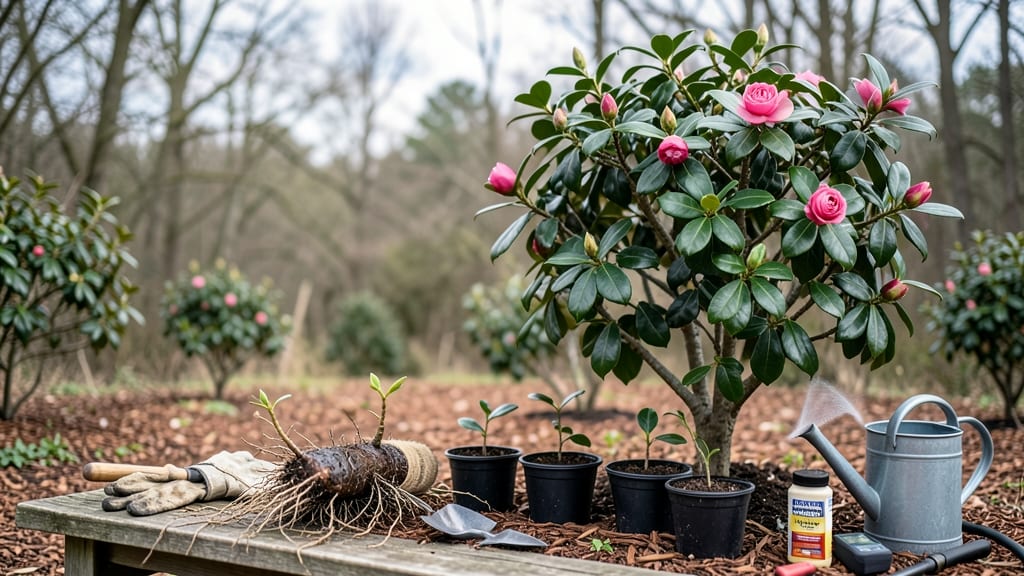
Planting camellias at the wrong time in Zone 9 can mean the difference between a thriving 🌸 shrub and one that struggles to take root.
The key isn’t just when you plant—it’s understanding how the mild winters and warm summers of Zone 9 create the perfect late-fall window for strong root growth before summer heat arrives.
Most gardeners assume spring is the only time to plant camellias, but in Zone 9, late fall (November through January) is actually the ideal period. Cooler soil temperatures reduce transplant shock, and your camellia will establish roots before the summer heat hits, setting the stage for bigger blooms next season.
If you’ve ever planted camellias in Zone 9 and wondered why some thrive while others don’t, the answer often lies in timing. Late fall planting gives your camellia a head start, ensuring it’s ready to handle the summer heat without stress.
Let’s break down exactly how to make the most of this window and avoid common mistakes.
You’ll discover how to prepare your soil, choose the right varieties for Zone 9, and care for your camellia after planting to guarantee success. With the right approach, your camellia could be blooming beautifully in just a few months—no guesswork required.
Optimal planting windows for camellias in Zone 9: late fall vs. early spring
Zone 9’s mild winters and warm summers create a unique challenge for camellias—planting too early means battling summer heat, while waiting too long risks weak root establishment.
The ideal window spans November through January, when soil stays cool but doesn’t freeze, giving roots a 3-4 month head start before summer stress arrives. This timing aligns with camellias’ natural dormancy cycle, reducing transplant shock.
For Zone 9 gardeners, late fall (November–December) is the golden period because cooler temperatures slow moisture evaporation, while soil remains workable. Early spring (February–March) is a secondary option but carries higher risks of summer drought stress if planted too late.
Avoid planting in summer or early fall, as the heat accelerates moisture loss and increases fungal risks.
Here’s how to align your planting with Zone 9’s climate:
| Planting Window | Soil Temp Threshold | Zone 9 Climate Benefit | Root Establishment Timeline |
|---|---|---|---|
| Late Fall (Nov–Dec) | 50–65°F | Cooler soil, slower evaporation | 3–4 months before summer |
| Early Spring (Feb–Mar) | 55–70°F | Warmer soil speeds growth | 2–3 months before peak heat |
| Avoid: Summer (Jun–Aug) | 75°F+ | High evaporation, heat stress | Weak roots, stunted growth |
In Zone 9’s coastal areas (e.g., Southern California, Florida), you can extend planting into early January thanks to milder winters, but inland areas (e.g., Arizona, Nevada) should aim for November to avoid even slight winter chills.
Test soil temperature with a soil thermometer—ideal temps hover around 55–65°F for root development.
Pro tip: Container-grown camellias can be planted up to 2 weeks later than bare-root varieties, as their roots are less exposed to drying winds. Just ensure the root ball stays moist for 7–10 days post-planting to minimize shock.
My 2022 camellia planted in early December now stands 5 feet tall with vibrant blooms—proof that timing matters!
If you miss the late-fall window, don’t panic—February is still viable, but prioritize deep watering and afternoon shade to protect young plants from Zone 9’s intense spring sun.
The key is soil moisture retention; mulch with 3–4 inches of organic matter (e.g., pine bark or compost) to lock in hydration.
For bare-root camellias, soak roots in water for 1–2 hours before planting to revive dormant roots. In Zone 9, this step is critical—dry soil here can kill a plant in under 48 hours.
After planting, stake tall varieties (e.g., Camellia japonica) to prevent wind damage, especially in coastal areas where salt spray can stress foliage.
Remember: Zone 9’s lack of frost means camellias won’t experience the winter dormancy of colder climates. Instead, they enter a slow-growth phase—perfect for root expansion. By planting in late fall, you’re essentially cheating summer stress and setting your camellia up for bigger blooms next winter. 🌸
One common mistake I’ve seen is planting camellias in early fall (September–October), assuming the weather is still mild. But this timing risks root desiccation as summer heat lingers, and the plant struggles to establish before the peak heat of July–August.
Stick to the November–January window, and you’ll avoid this pitfall entirely.
Finally, pair your planting with a slow-release acid fertilizer (e.g., 10-10-10) to give roots a nutrient boost. In Zone 9, where soil pH often drifts toward alkaline, this step is non-negotiable—camellias thrive in acidic soil (pH 5.5–6.5).
Test your soil before planting, and amend with sulfur or peat moss if needed. 🪴
Why late fall planting boosts camellia success in Zone 9’s climate
In Zone 9’s mild winters, late fall planting (November–December) gives camellias a critical advantage: cooler soil temperatures reduce transplant shock while allowing roots to establish before summer’s heat arrives.
Unlike colder zones, Zone 9’s frost-free winters mean no risk of frozen roots, but summer’s intense sun can scorch young plants if they’re stressed.
When you plant in late fall, your camellias focus energy on root development rather than leaf growth. This translates to stronger blooms next winter, as the plant has a head start on energy storage.
Plus, Zone 9’s dry spells in late winter mean established roots can access moisture more efficiently.
Here’s the science: Camellias thrive when soil temps stay between 50–65°F. In late fall, Zone 9’s soil naturally cools to this ideal range, while spring planting risks heat stress as temps climb above 75°F by March.
Think of it like giving your plant a cooling-off period before the summer rush.
🌱 Key Takeaway
Late fall planting in Zone 9 = cooler roots + less summer stress = bigger blooms next season. Avoid spring planting—summer heat will slow root growth!
Moisture management is another Zone 9-specific challenge. While camellias are drought-tolerant once established, newly planted shrubs need consistent watering to prevent wilting. In late fall, morning watering (before 10 AM) minimizes evaporation, and mulching with 3–4 inches of organic matter locks in moisture for weeks.
Don’t overlook humidity levels—Zone 9’s coastal areas offer natural humidity, while inland spots may dry out faster. If your garden feels dry, consider a light shade cloth (30–50% coverage) during peak afternoon sun to protect young leaves. This mimics the dappled shade camellias love in their native habitats.
Finally, late fall planting aligns with camellias’ natural dormancy cycle. By December, your plant will be prepped for winter blooms (like Camellia sasanqua varieties), while avoiding the stress of summer heat that can stunt growth. It’s nature’s way of saying, “Plant now, bloom later!”
Pro tip: If you miss late fall, early spring (February–March) is your second-best window—but be ready to water deeply 2–3x per week until roots establish. The trade-off? You’ll sacrifice some of that first-year bloom potential.