
Companion Plants
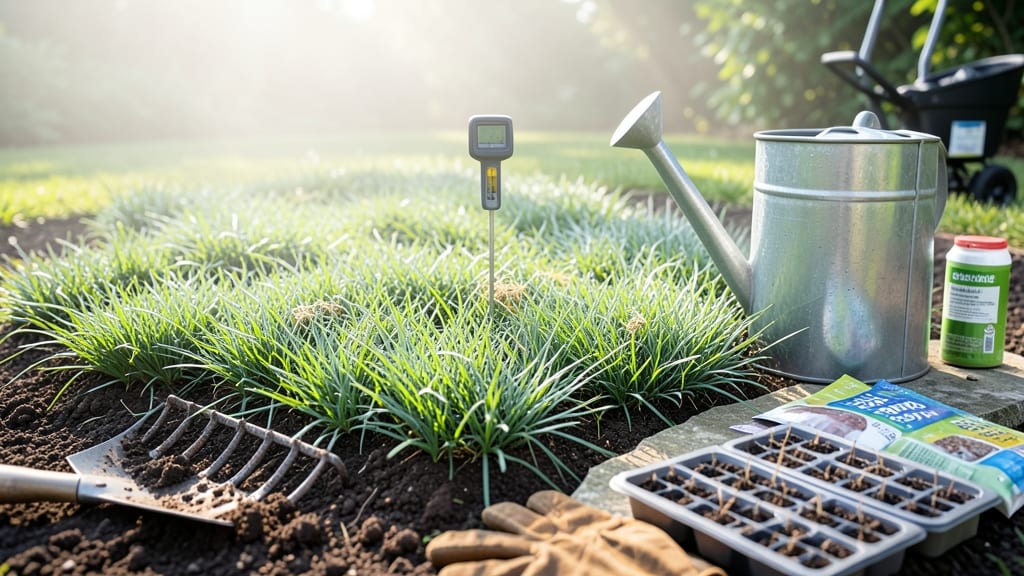
Planting your grass 🌱 at the wrong time in spring can leave you staring at a patchy, weed-infested yard instead of the lush lawn you dreamed of.
The key isn’t just waiting for “spring” to arrive—it’s knowing exactly when your local soil is warm enough and frost-free for strong root growth.
I’ve learned the hard way that planting too early (when soil is still cold) or too late (when summer heat arrives) wastes seed and invites weeds.
Whether you’re in Zone 6a or another region, timing matters more than you think—especially for cool-season grasses like fescue or ryegrass that need that perfect window.
In this guide, I’ll break down the science behind frost dates, soil temperature thresholds, and regional planting windows so you can avoid common mistakes. You’ll discover how to check soil warmth with simple tests and adjust your schedule for early or late springs.
Ready to transform your yard? Let’s dive into the exact steps to plant your grass 🌱 for a thick, healthy lawn that stays weed-free all season long.
Spring grass planting timeline by US frost zones (with exact dates)
Planting grass at the wrong time can turn your spring lawn dreams into a patchy, weed-infested nightmare. The key? Aligning your planting window with your USDA frost zone and soil temperature.
Cool-season grasses like fescue and ryegrass thrive when soil hits 55–65°F, while warm-season types such as bermuda and zoysia wait for 65–75°F. Timing isn’t just about the calendar—it’s about avoiding frost damage or seed desiccation.
Most gardeners make one of two mistakes: planting too early when soil is still cold, or too late when summer heat arrives. Both scenarios stunt germination and invite weeds. The solution?
Use your last frost date (find it on the USDA Plant Hardiness Map) as your starting point, then add 2–4 weeks for soil to warm up. For example, in Zone 5, where last frost typically hits April 15, ideal planting spans mid-April to early May.
Here’s how to translate frost zones into actionable deadlines for your region:
| USDA Zone | Cool-Season Grasses (Fescue, Ryegrass, Bluegrass) | Warm-Season Grasses (Bermuda, Zoysia, St. Augustine) | Soil Temp Threshold (°F) | Key Risk: Planting Too Early/Late |
|---|---|---|---|---|
| Zone 3–4 | Late April–May | June–July | 50–60°F | Frost kill; slow germination |
| Zone 5 | Mid-April to early May | Late May–June | 55–65°F | Frost kill if planted before last frost |
| Zone 7–8 | Early March–April | April–May | 60–70°F | Weed competition; drought stress |
| Zone 9–10 | Fall only (Oct–Nov) | March–April | 65–75°F | Heat shock; poor establishment |
Pro tip: Warm-season grasses in cooler zones (like bermuda in Zone 6) often struggle to establish before summer heat arrives. If you’re in a transition zone (Zone 6–7), consider fall planting for warm-season types—it gives roots time to anchor before winter dormancy.
For cool-season grasses, aim to plant 4–6 weeks before your first expected frost in fall. This mirrors the spring timeline but avoids summer’s intense heat. If you’re unsure about your zone, use the USDA Interactive Map to pinpoint your exact location. Most zones see 3–4 weeks of overlap
How to check soil warmth before planting (3 simple tests)
Planting grass seed too early or late in spring can lead to poor germination or wasted seed—soil temperature matters more than calendar dates. Before you spread that first batch, verify your soil is ready with these 3 simple tests that take just minutes.
I’ve used these myself to avoid planting into cold, damp soil that would’ve smothered my seeds.
First, grab a soil thermometer (or a candy thermometer if you’re DIYing). Stick it 4 inches deep—this is where your grass seeds will germinate. For cool-season grasses like fescue or bluegrass, aim for 55–65°F.
Warm-season varieties like Bermuda need 65–75°F. If it’s cooler, wait a few days to a week—soil warms 1–2°F per day in spring.
Action: Check 4-inch depth—ideal temps: 55–65°F (cool-season) or 65–75°F (warm-season)
Pro Tip: Test morning and evening—temps fluctuate daily.
Action: Press soil firmly—it should hold shape but not be muddy. If it crumbles, it’s too dry; if it sticks, it’s too wet.
Fix: Add compost if dry or let rain soften if too compacted.
Action: Sandy soil? Plant seeds ¼ inch deep. Clay soil? ⅛ inch deep—they need light to sprout.
Warning: Never bury seeds deeper than ½ inch—they won’t break through.
Action: If soil warms too fast (e.g., above 75°F), spread a thin layer of straw to slow heat buildup and retain moisture.
Bonus: Mulch also blocks weeds from stealing nutrients.
One common mistake I see is planting when soil temps are too warm—above 75°F can dry out seeds before they sprout. If your thermometer reads higher, delay planting or use shade cloth to cool the soil temporarily.
Pro tip: Water deeply the day before testing—moist soil conducts heat differently and gives a more accurate reading.
For high-altitude areas (like Colorado or Utah), soil may stay cold longer. Check local USDA frost maps and add 2–4 weeks to your planting window. Meanwhile, in Southern states, soil can warm quickly—don’t wait until June, or you’ll miss the optimal germination window for warm-season grasses.
Remember, seed-to-soil contact is critical. After testing, loosen the top ½ inch of soil with a rake to create a fine, crumbly bed. This ensures seeds stay in place and have direct access to moisture.
Once planted, keep the soil consistently moist (not soggy) until germination—usually 7–21 days depending on the grass type.
🌱