
Companion Plants
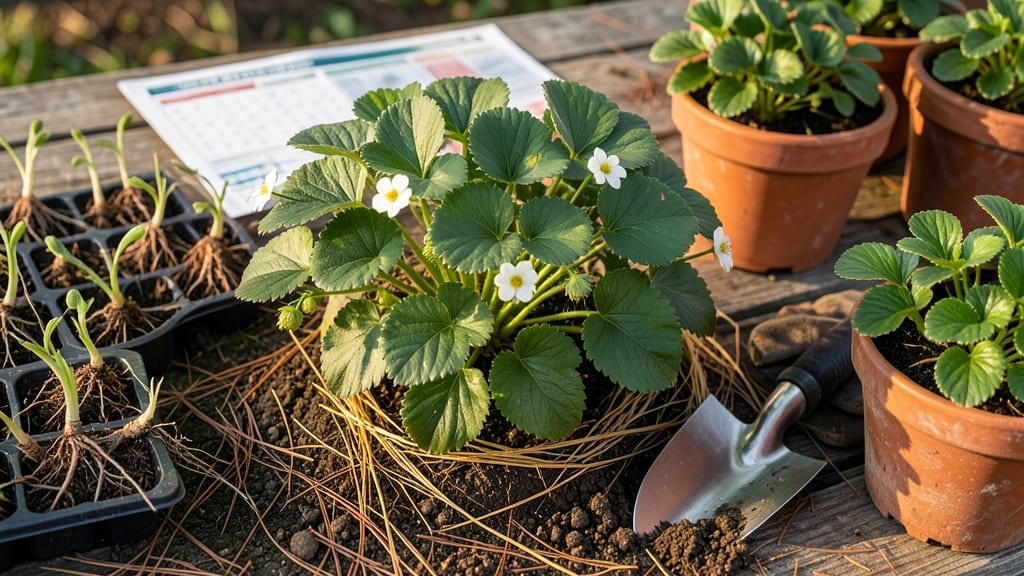
Planting strawberries in Zone 6 at the wrong time can mean the difference between a bountiful harvest of juicy 🍓 and wasted effort. The key is understanding your last frost date—typically around mid-April—and choosing between two proven windows: early spring or early fall.
Spring planting gives you a head start, but rushing it risks frost damage to tender new growth. Meanwhile, fall planting lets you take advantage of cooler soil and fewer pests, though you’ll need to protect your plants if winter arrives early.
Both methods work, but the timing matters more than you might think.
Whether you’re working with bare-root plants or potted varieties, I’ll walk you through the exact weeks to plant, how to prepare your soil, and even when to mulch for extra protection. No guesswork—just a straightforward guide to get your strawberries off to the best possible start.
Ready to avoid common mistakes and maximize your yield? Let’s dive into the best strategies for your Zone 6 garden, so you can enjoy sweet, homegrown strawberries all season long.
Best planting windows for strawberries in Zone 6 (with frost risk guide)
Zone 6 gardeners have two prime windows to plant strawberries: early spring and early fall. Spring planting gives you a summer harvest, while fall planting extends your season into autumn. The key is avoiding frost damage—strawberries are tender until established.
For spring planting, aim for 4-6 weeks before your last frost date (typically late March to mid-April in Zone 6). Soil should reach 40°F or warmer to prevent root shock. Fall planting should happen 6-8 weeks before your first frost (usually mid-August to early September).
Your exact frost dates vary by location. Check your local USDA Plant Hardiness Zone Map or use a frost calendar from your county extension office. For example, Chicago’s last frost averages April 15, while Denver’s is around April 20.
Microclimates matter! Strawberries planted in sunny, sheltered spots (like near a south-facing wall) can handle slightly earlier planting than those in low-lying, frost-prone areas. A 3-4°F temperature buffer is wise if your yard has cold pockets.
📅 Zone 6 Strawberry Planting Timeline
| Planting Window | Ideal Timeframe | Soil Temp Requirement | Frost Risk |
|---|---|---|---|
| Spring Planting | Late March–Mid-April | 40°F+ (4°C+) | Low (post-last frost) |
| Fall Planting | Mid-August–Early September | 50°F+ (10°C+) | Moderate (established roots needed) |
| Bare-Root Plants | Spring only (dormant roots) | 40°F+ (4°C+) | High if planted too early |
| Potted Plants | Spring or Fall | 50°F+ (10°C+) | Low (flexible timing) |
⚠️ Pro Tip: Use potted plants for fall planting—they establish faster than bare-root.
June-bearing varieties (like 'Jewel') need chilling hours (300–500 hours below 45°F) to fruit well. Plant them in fall for spring harvest or early spring if you missed the fall window.
Everbearing ('Honeoye') and day-neutral ('Seascape') types are more flexible and can handle both spring and fall plantings.
If you’re unsure about frost dates, use row covers or cold frames to protect young plants. For spring plantings, wait until nighttime temperatures stay above 32°F consistently. Fall plantings should have 6–8 weeks of warm soil before frost to root deeply.
Mulch heavily with straw or pine needles after planting to insulate roots. In Zone 6, evergreen mulch (like cedar chips) adds extra winter protection. Remove mulch in early spring to allow soil to warm for planting.
For container growing, plant in late May to avoid early-season frosts. Containers warm up faster than garden beds, giving you a 2–3 week head start on in-ground plantings.
🌱 Remember: The goal is established roots before frost. Whether you choose spring or fall, prioritize soil warmth and microclimate safety over calendar dates.
Best planting windows for strawberries in Zone 6 (with frost risk guide)
Timing your strawberry planting in Zone 6 means balancing frost dates with soil warmth. The last average frost in most Zone 6 areas falls around April 15, but microclimates (like hills or valleys) can shift this by 1-2 weeks.
For spring planting, aim for 4-6 weeks before your local last frost date—typically early March to mid-April. This gives roots time to establish before summer heat arrives.
Fall planting offers a second chance, with August to early September being ideal. Plant 6-8 weeks before the first frost (usually mid-October in Zone 6).
Fall-planted strawberries often yield smaller berries but produce earlier the following year. June-bearing varieties (like 'Jewel') thrive with this approach, while everbearing types (like 'Ozark Beauty') may produce a second harvest.
🌱
Check your soil temperature before planting—use a soil thermometer to confirm it’s above 45°F (7°C) for spring or 55°F (13°C) for fall.
Bare-root plants can handle cooler soils, but potted varieties need warmer conditions. Zone 6b gardeners (colder sub-zone) should plant 2 weeks later than Zone 6a to avoid frost damage.
For container growing, extend your window by 2-3 weeks—pots warm up faster in spring. Place containers near south-facing walls or use black plastic mulch to raise soil temps. If late frosts threaten, cover plants with floating row covers or cloches until danger passes.
🌡️
Pro tip: Use straw mulch (not leaves) after planting to regulate soil temps and retain moisture. For fall plantings, add 3-4 inches of mulch by late October to insulate roots during winter. This simple step can mean the difference between frost-heaved plants and a thriving spring harvest.