
Plants
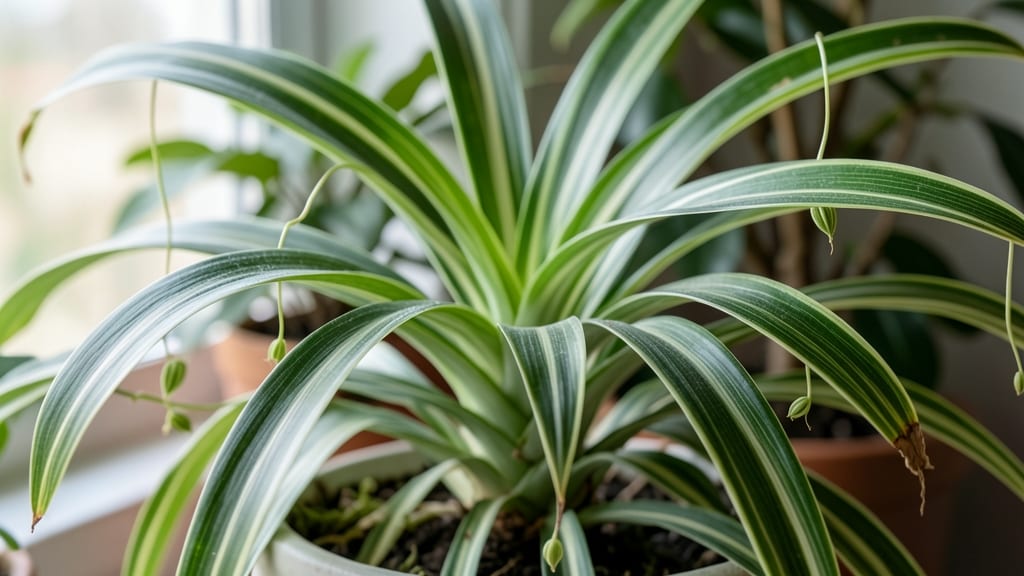
If your 🌿 spider plant is losing its vibrant stripes or growing leggy, the answer to how much light does a spider plant need? might be simpler than you think—it’s craving the right amount of light.
Too much sun and you’ll see crispy brown edges; too little, and those stunning variegated patterns fade into dull green. The key to keeping your plant thriving lies in understanding its ideal lighting conditions, which are easier to master than you’d expect.
Most people assume spider plants need bright sunlight, but the truth is, they actually prefer bright, indirect light—think of an east or north-facing window where they get gentle morning rays without harsh afternoon exposure.
This balance keeps their leaves lush and their growth steady, whether you’re growing them in a sunlit kitchen or a dim office corner.
What I love about spider plants is how forgiving they are once you get the light right. A few simple adjustments—like rotating the pot or using sheer curtains—can make all the difference.
You’ll learn how to spot the signs of overlighting or underlighting, so you can give your plant exactly what it needs to stay happy and healthy year-round.
Ready to turn your spider plant into a thriving, low-maintenance superstar? Let’s dive into the perfect lighting setup that’ll keep those iconic variegated leaves looking their best, no matter where you place it in your home.

Ideal light requirements for spider plants: bright, indirect sunlight explained
Spider plants (Chlorophytum comosum) are famous for their adaptability, but they still need the right light conditions to thrive. While they can survive in low-light offices, their variegated leaves (those stunning white or yellow stripes) fade without enough brightness.
Let’s dive into the perfect light setup to keep your plant happy and vibrant.
Most experts agree that bright, indirect light is ideal for spider plants.
This means placing them near a window where they receive dappled sunlight or filtered light—think of it like the shade under a tree. East-facing windows are perfect because they offer gentle morning sun without harsh afternoon rays. North-facing windows also work well, especially in warmer climates.
If you’re placing your spider plant in a south-facing window, be cautious—direct afternoon sun can burn the leaves, causing brown, crispy edges. To prevent this, position the plant 2-3 feet away from the glass or use a sheer curtain to diffuse the light.
Even a few hours of direct sun can be too much for delicate foliage.
| Light Condition | Ideal Placement | Signs of Stress |
|---|---|---|
| Bright, Indirect Light | East or North window, 2-3 ft away | Healthy variegation, upright growth |
| Low Light | Office, bathroom, or shaded room | Leggy growth, faded stripes |
| Direct Sunlight | South or West window, no filter | Brown tips, sunburned patches |
Seasonal changes also affect your spider plant’s light needs. During winter months, when sunlight is weaker, you might notice slower growth or duller variegation.
This is normal, but you can help by moving the plant closer to a south-facing window or supplementing with a grow light for 6-8 hours a day.
In summer, the opposite is true—too much intense sunlight can overwhelm the plant, so rotate the pot quarter-turns weekly to ensure even light exposure.
One of the easiest ways to monitor your spider plant’s light needs is by observing its growth patterns. If the leaves start to stretch toward the light (a condition called etiolation), it’s begging for more brightness.
On the flip side, if the tips turn brown and crispy, it’s getting too much direct sun. The goal is to strike a balance where your plant stays compact, green, and full of life.
For those living in apartments or offices with limited natural light, don’t worry—spider plants are resilient! They can adapt to artificial lighting, such as LED bulbs designed for plants. Place the bulb 12-18 inches above the plant and keep it on for 12-14 hours daily.
This mimics natural daylight and keeps your spider plant thriving even in dim spaces.
Pro tip: If you’re unsure about your home’s light conditions, try the "shadow test". Hold a piece of paper near your plant’s spot—if the shadow is sharp and dark, the light is too harsh.
If it’s soft and fuzzy, you’ve found the perfect indirect light spot for your spider plant.
Remember, spider plants are forgiving, but they do communicate their needs through their leaves. Pay attention to these visual cues, and you’ll create the ideal environment for a lush, happy plant that keeps producing those adorable spiderettes (the baby plants that dangle from the stems).
With the right light, your spider plant will reward you with years of vibrant growth and easy-care beauty. 🌿
How to adjust light for different spider plant varieties and growth stages
Not all spider plants are created equal—some varieties crave more light than others, and their needs change as they grow. The variegated types, like the popular 'Variegatum', need slightly more light to maintain their stunning white and yellow stripes.
Without enough light, those gorgeous patterns fade to dull green, and your plant loses its charm. Meanwhile, solid green varieties are more forgiving and thrive in lower light conditions.
Juvenile spider plants also have different light requirements than their mature counterparts. Young plants benefit from gentler, indirect light to avoid stress, while established plants can handle a bit more brightness.
If you notice your spider plant stretching toward the light or developing long, thin leaves, it’s begging for a brighter spot—but not direct sun, which can cause leaf burn.
Variegated vs. Solid Green Spider Plants
| Variety | Light Needs | Signs of Stress |
|---|---|---|
| Variegated | Bright, indirect light (4-6 hours) | Fading stripes, leggy growth |
| Solid Green | Low to medium light (2-4 hours) | Slow growth, pale leaves |
If your spider plant is struggling, don’t despair—there are simple ways to adjust its light exposure. For low-light situations, like a north-facing window or office corner, rotate your plant quarter-turns every week to ensure even growth.
If you notice brown tips or crispy edges, it’s getting too much direct sun—move it back 2-3 feet from the window or add a sheer curtain to diffuse the light.
For plants that need more light but can’t move to a brighter spot, consider using a grow light for 6-8 hours a day. LED grow lights are energy-efficient and won’t overheat your plant.
Place it about 12-18 inches above the plant and adjust the height as it grows. This mimics natural light and keeps your spider plant happy, even in dim corners.
Seasonal changes also affect your spider plant’s light needs. In summer, when sunlight is intense, provide afternoon shade to prevent leaf burn. In winter, when days are shorter, supplement with a grow light or move the plant closer to a south-facing window.
These small adjustments make a big difference in your plant’s health and appearance.
Remember, spider plants are resilient—they’ll adapt to a range of light conditions, but they’ll reward you with vibrant growth and those iconic pups when you give them the right amount of bright, indirect light. Experiment with placement and watch your plant thrive! 🌿